
Award-Winning Heritage Redevelopment at 25 Market Place, Ringwood
Winner of the Ringwood Society 2025 Design and Conservation Award – Residential Category
After nearly four years on site, Williams Lester Architects are proud to announce the completion of the redevelopment of 25 Market Place, Ringwood – a project that has now been recognised with the Ringwood Society’s 2025 Design and Conservation Award.
A New Chapter for a Much-Loved Landmark
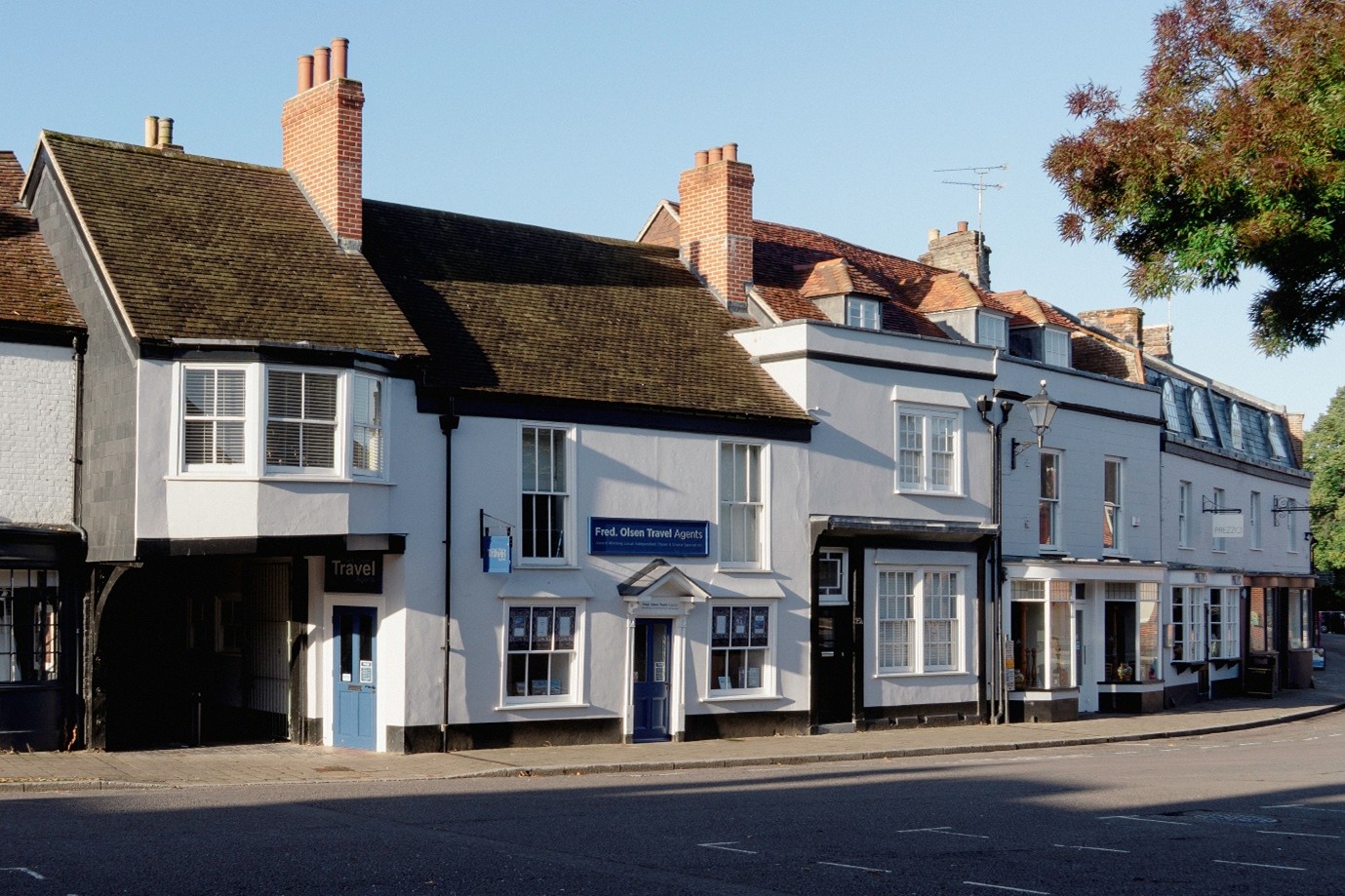
Residents of Ringwood will remember the building’s previous incarnations as The Red Lion and later Finn McCoulls, a familiar Georgian coaching inn at the heart of the town’s historic Market Place.
Following its sale by Punch Taverns in 2019, and facing declining commercial viability, the new owners, Surereed Ltd, sought to breathe new life into this Grade II listed landmark. The vision: a sensitive conversion into a mix of commercial and residential uses, complemented by a new residential development on the long-vacant brownfield site that once served as the pub’s car park.
The completed scheme now comprises:
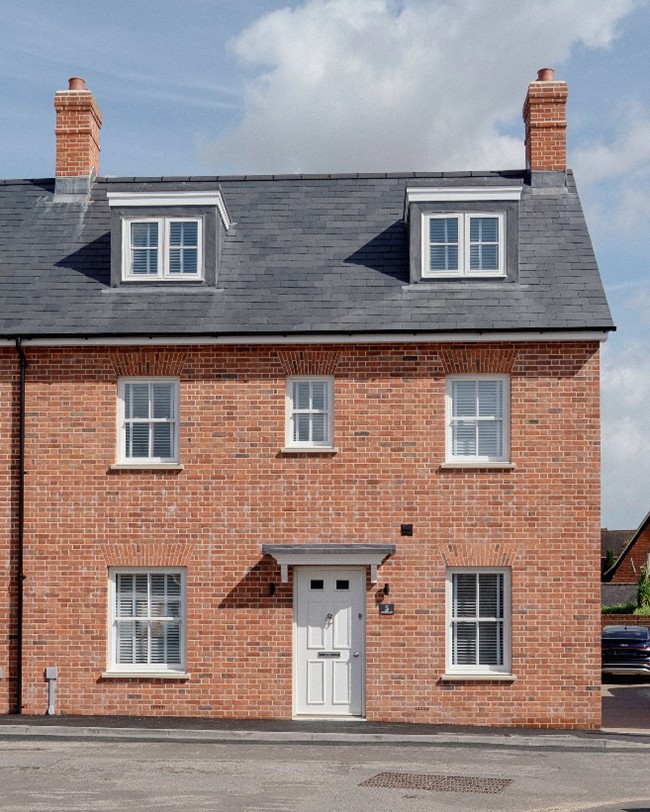
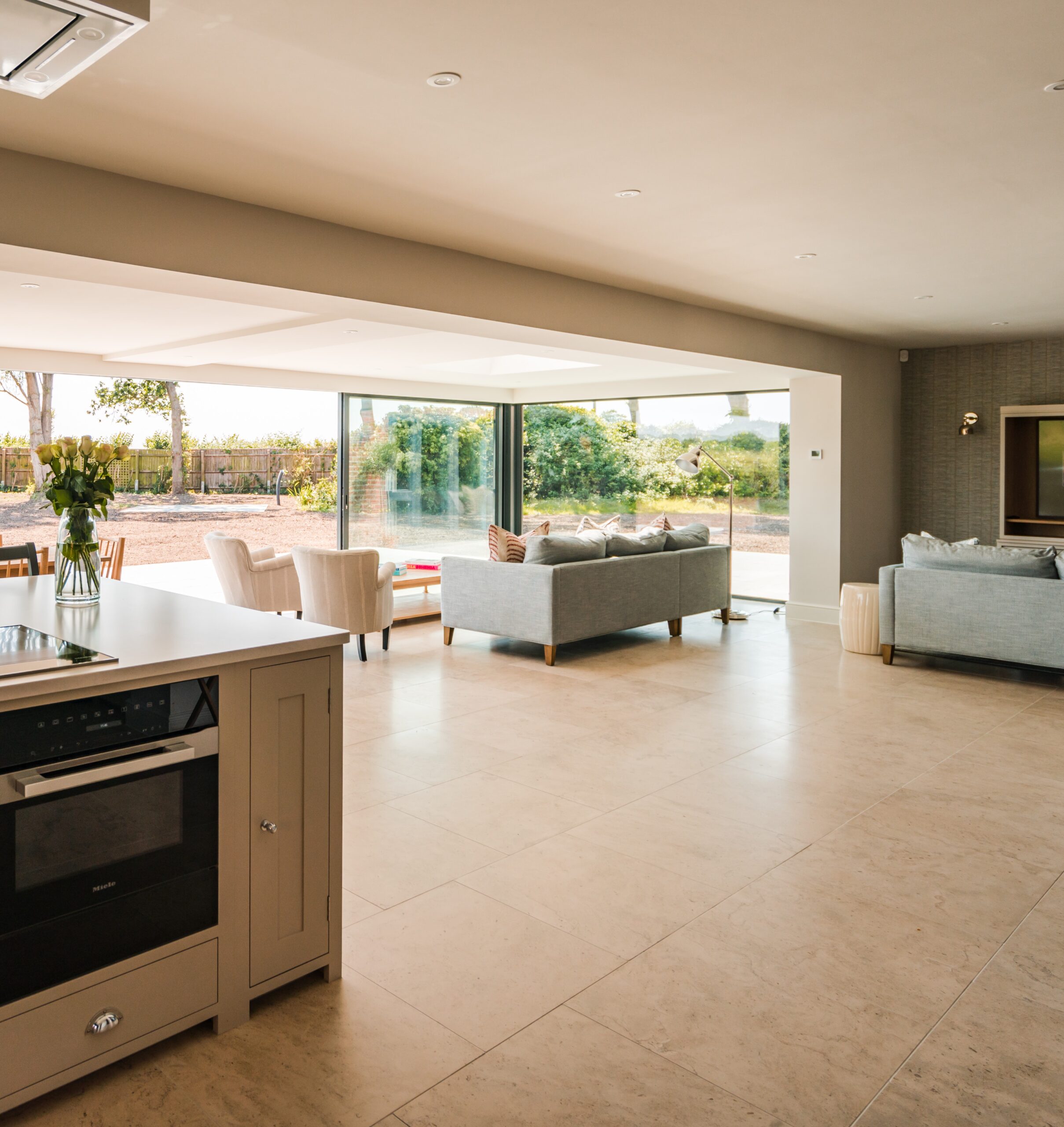
- Eight new homes to the rear, including six terraced townhouses and two detached cottages
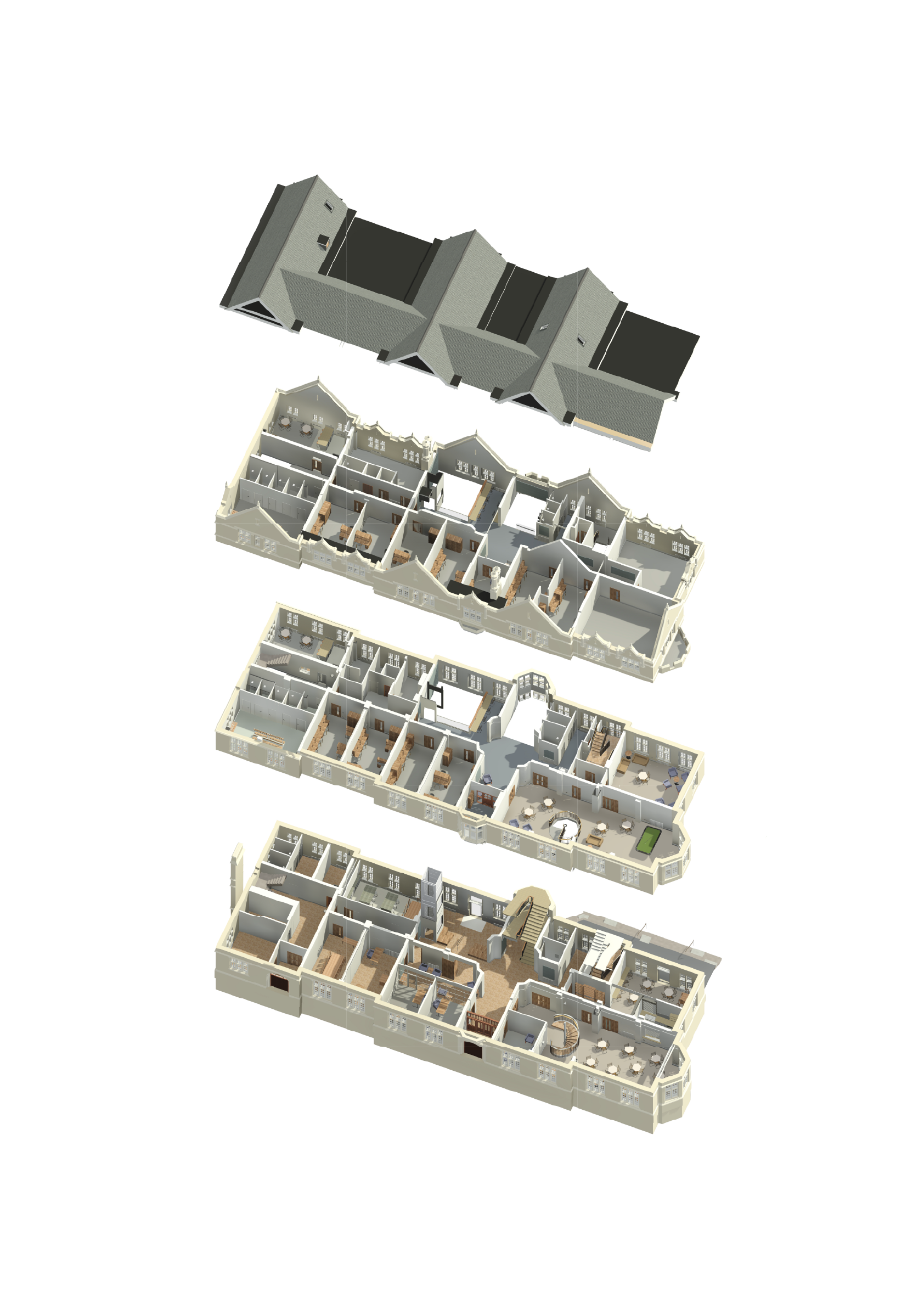
- The restored original inn, featuring a retail unit at ground floor, a spacious apartment above, and an adjoining townhouse
Together, the development revitalises a prominent town centre site, adding vitality and character to Ringwood’s Conservation Area.
Overcoming Complex Challenges
From the outset, the project faced an array of challenges typical of working within a sensitive historic environment, and several unexpected ones besides.
The planning process alone extended over 27 months, reflecting the level of care required to balance heritage, conservation, and community considerations.
Once construction began, the discovery of Japanese Knotweed, severe structural decay in the roof and façade, and the subsequent need for multiple Listed Building Consent amendments compounded delays and costs. These were further compounded by the global supply chain disruptions and inflationary pressures brought about by the Covid-19 pandemic and the war in Ukraine.
To stabilise the historic structure, a tented scaffold enveloped the building for an extended period, allowing careful restoration to continue while preserving the fragile fabric beneath.
Despite these challenges, the client and project team remained steadfast in their commitment to achieving a scheme of enduring quality and authenticity.
Restoring the Historic Inn
The first phase focused on the meticulous refurbishment and conversion of the original former coaching inn. Occupying Nos. 25 and 27 Market Place, the building once housed the entire pub across its ground floor, with a large flat above extending into the roof space.
A particularly distinctive feature, the open drumway under the projecting first-floor bay, was carefully retained. This historic access route once allowed horse-drawn brewer’s drays to pass through, a hallmark of traditional coaching inns of the era.
Years of neglect had taken their toll. Much of the front façade was in danger of collapse, requiring internal steelwork restraint and a complete replacement of the decayed oak roof structure, all undertaken in full compliance with listed building conservation standards.
The reconfiguration returned the original shop and flat to their historic arrangement, creating a three-storey townhouse, a retail unit at ground floor, and a generous self-contained apartment above.
The result is a faithful restoration that both honours the building’s history and provides vibrant new uses for the future.
Redeveloping the Rear Brownfield Site
The second element of the scheme transformed the long-derelict pub car park into a cohesive residential enclave.
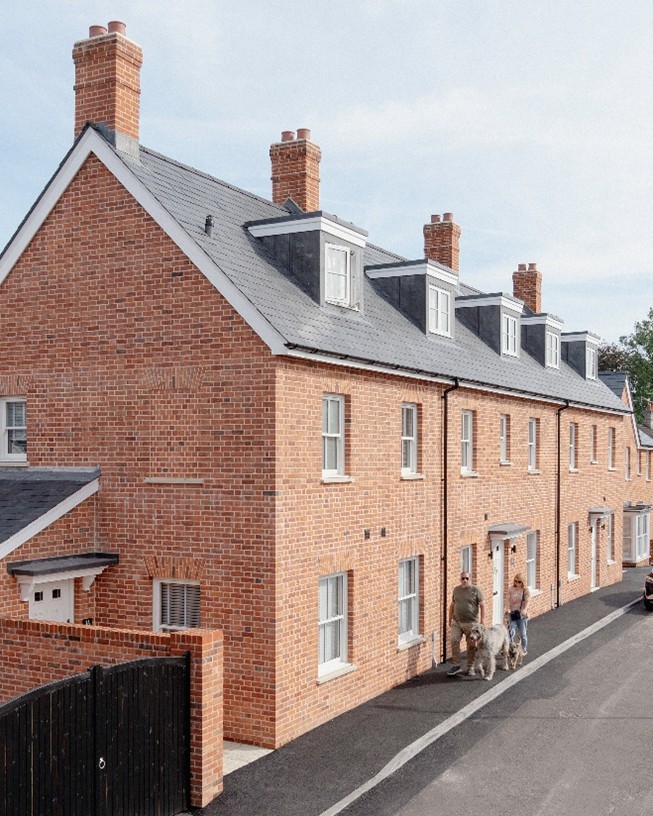
Eight new dwellings were introduced, accessed from Strides Lane, arranged as:
- Two terraces of two- and three-bedroom townhouses, and
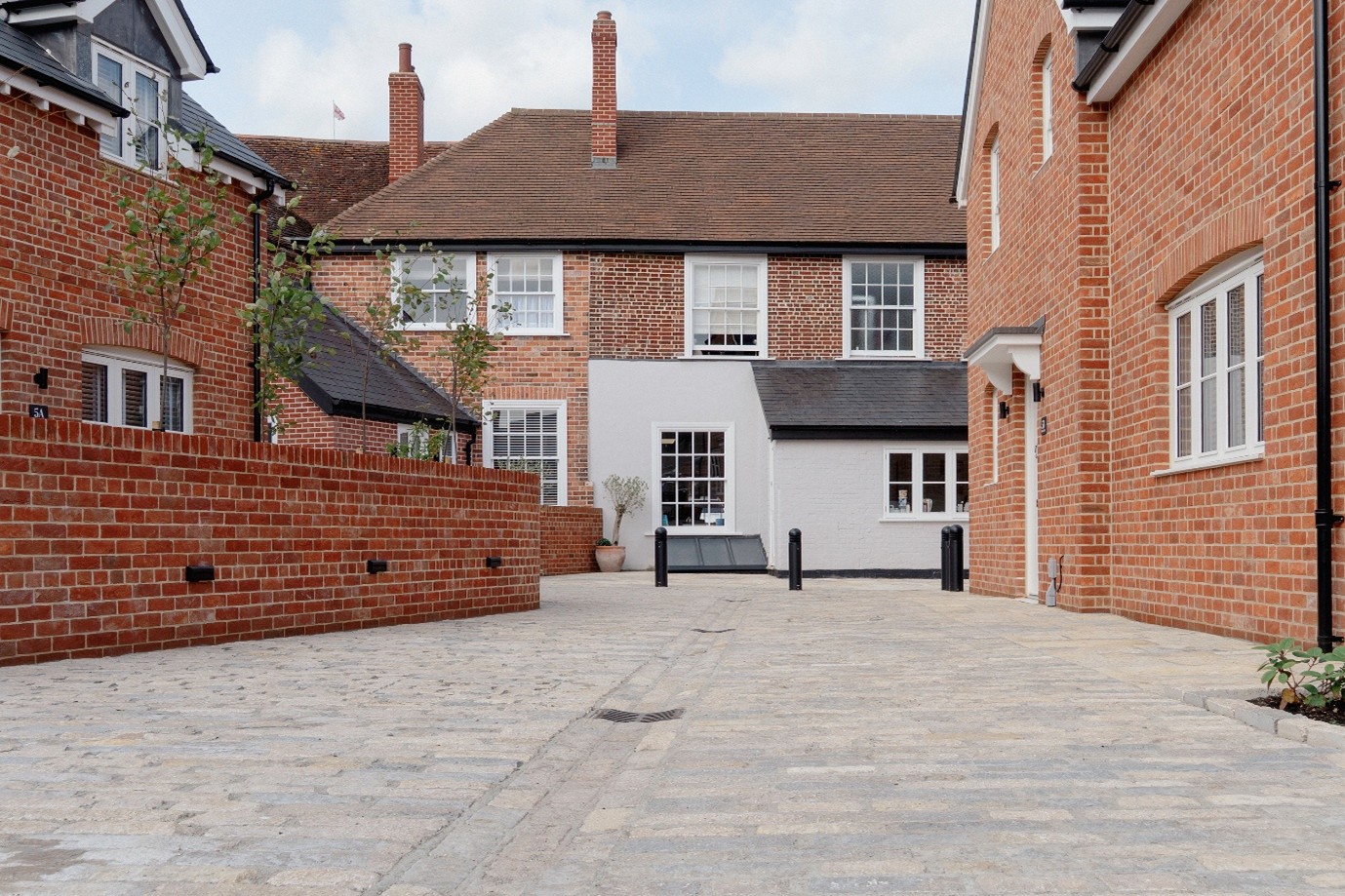
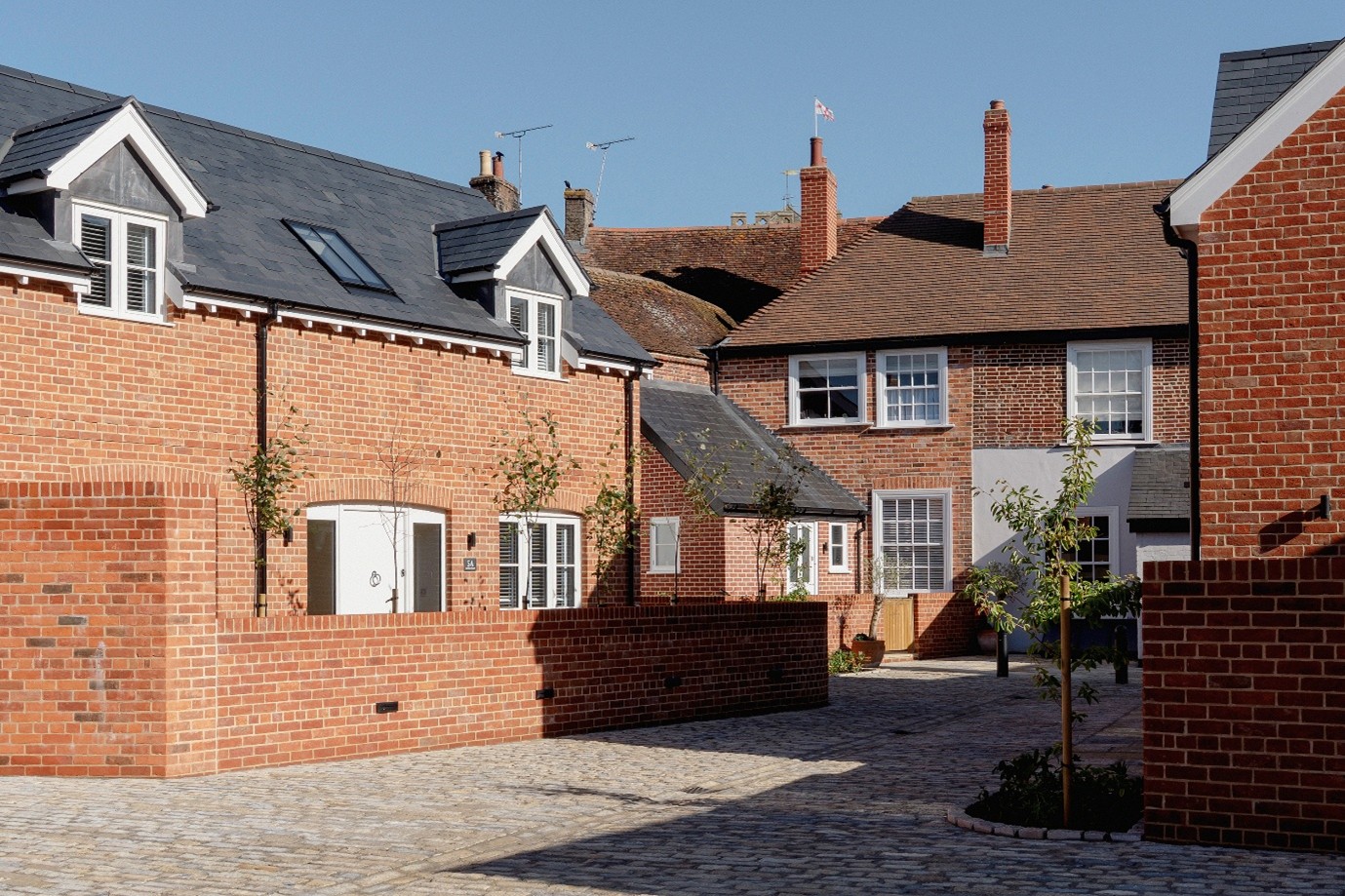
- Two detached cottages positioned to frame a picturesque view back towards the restored pub.
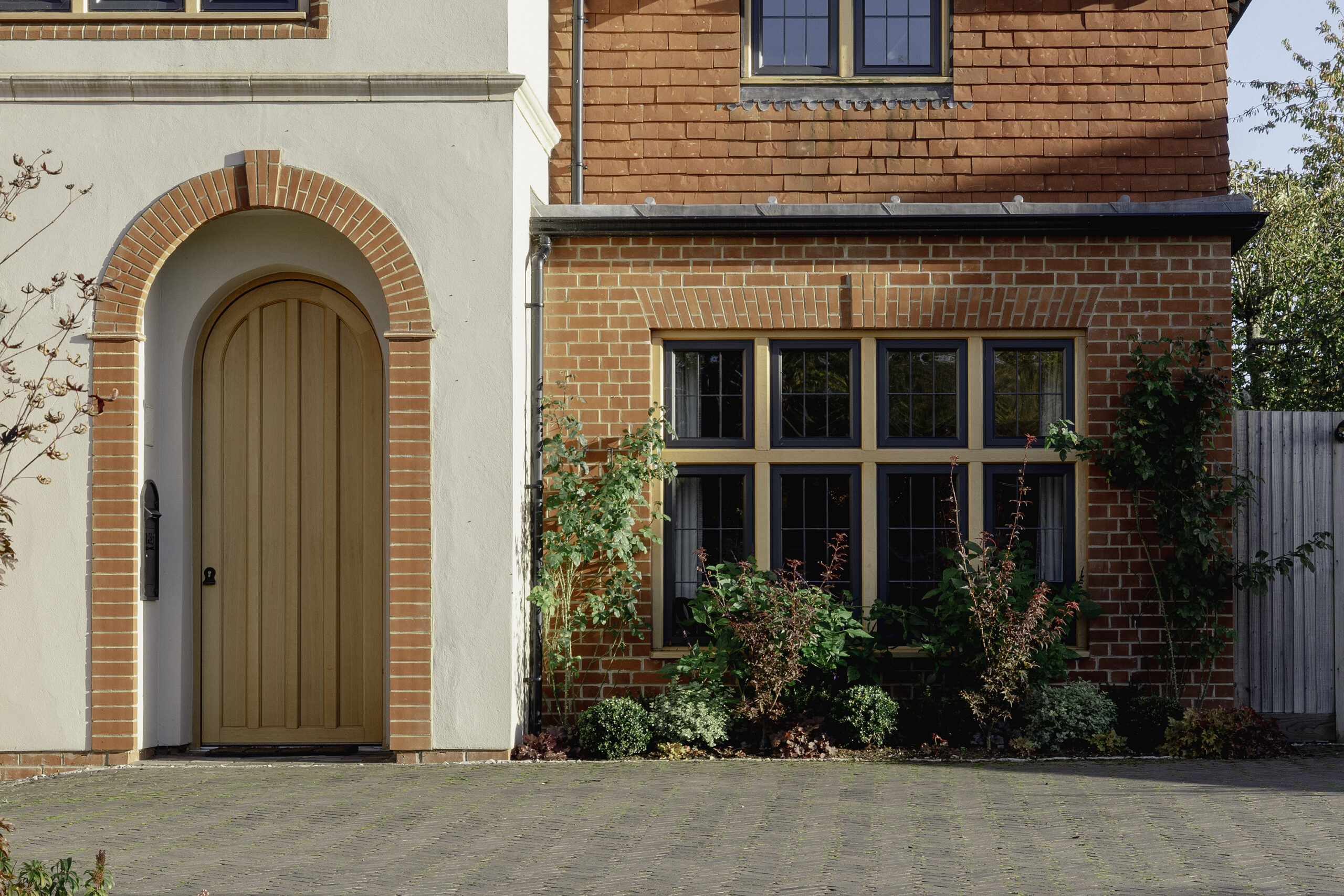
High-quality materials and detailing were chosen to ensure ‘local distinctiveness’ and harmony with the Conservation Area. Rich orange-red brickwork, arched and splayed brick window heads, and traditional, deep window reveals contribute to a design language that feels unmistakably ‘Ringwood’.
Pedestrian permeability was another key design driver, ensuring that members of the public can freely walk through the site between the Bickerley and the Market Place, enhancing connectivity, natural surveillance, and community integration.
The courtyard is paved in Purbeck stone, adding tactile richness and a fitting sense of place.
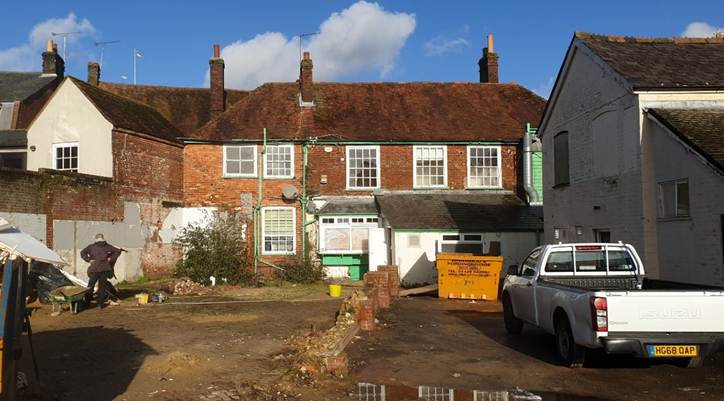
Before – 2019
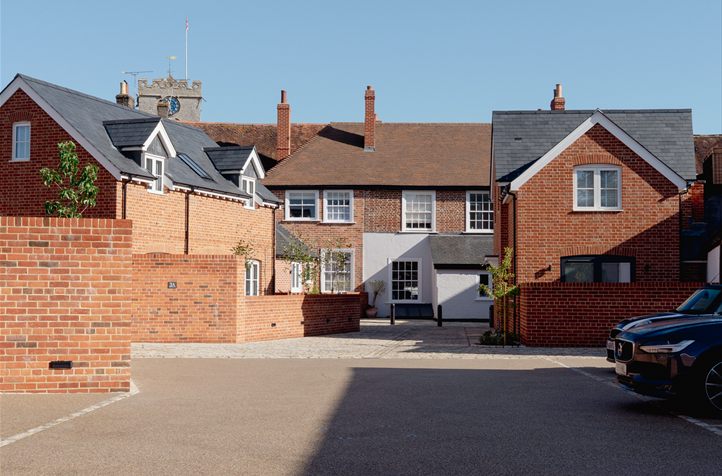
Completed scheme – 2025
A Sustainable and Living Legacy
The project’s success has been affirmed not only through its design award but also by the early return of local wildlife, with swifts now nesting beneath the eaves of the courtyard cottages before many residents have even moved in.
This natural endorsement reflects the scheme’s broader sustainability ethos and its sensitive integration into the town’s historic and ecological fabric.
Conclusion
The redevelopment of 25 Market Place stands as a testament to what can be achieved when heritage, design excellence, and perseverance come together.
Through close collaboration between Surereed Ltd, Williams Lester Architects, and the wider project team, a once-derelict site has been reborn, contributing renewed life and architectural integrity to the heart of Ringwood.