
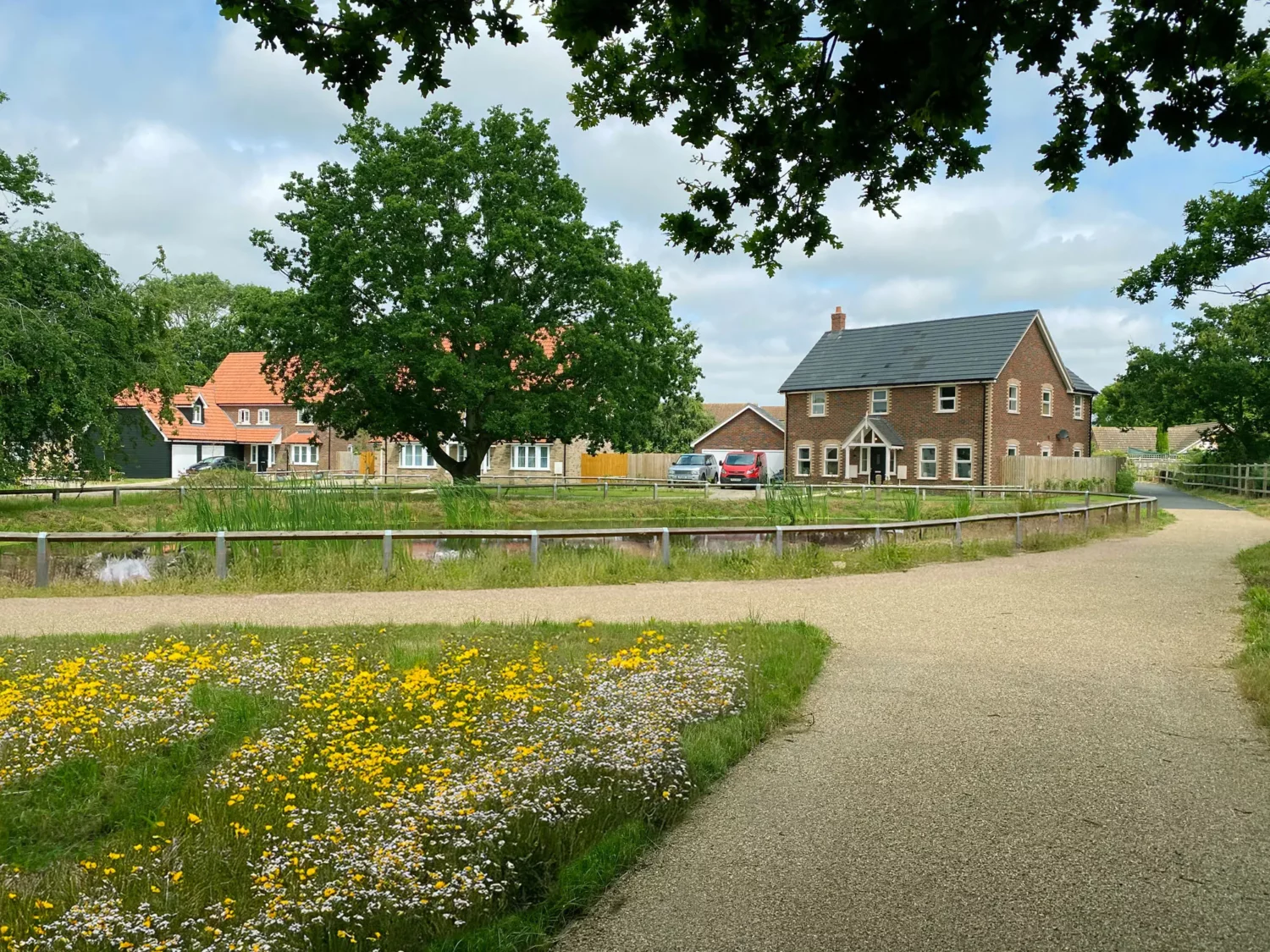
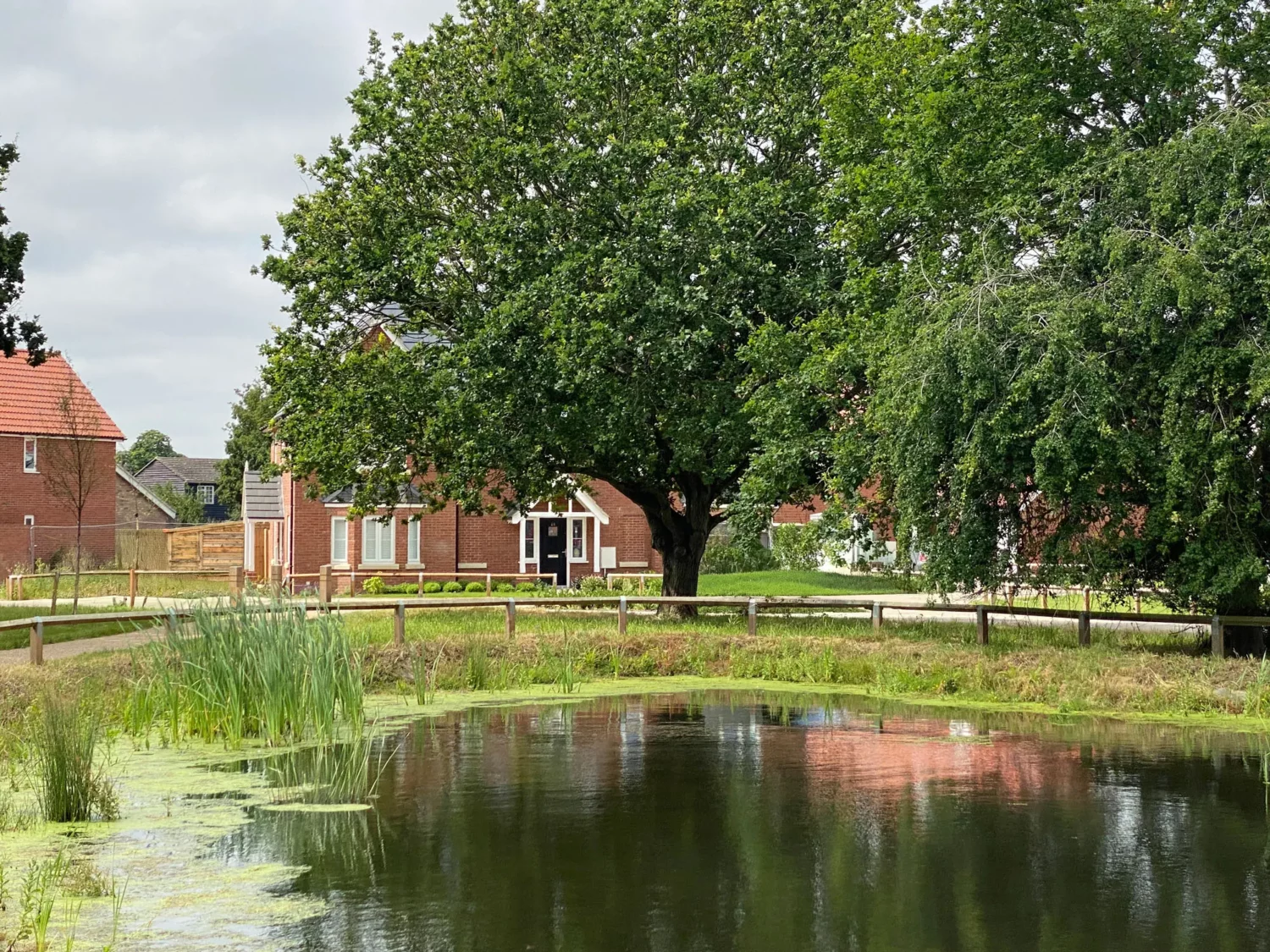
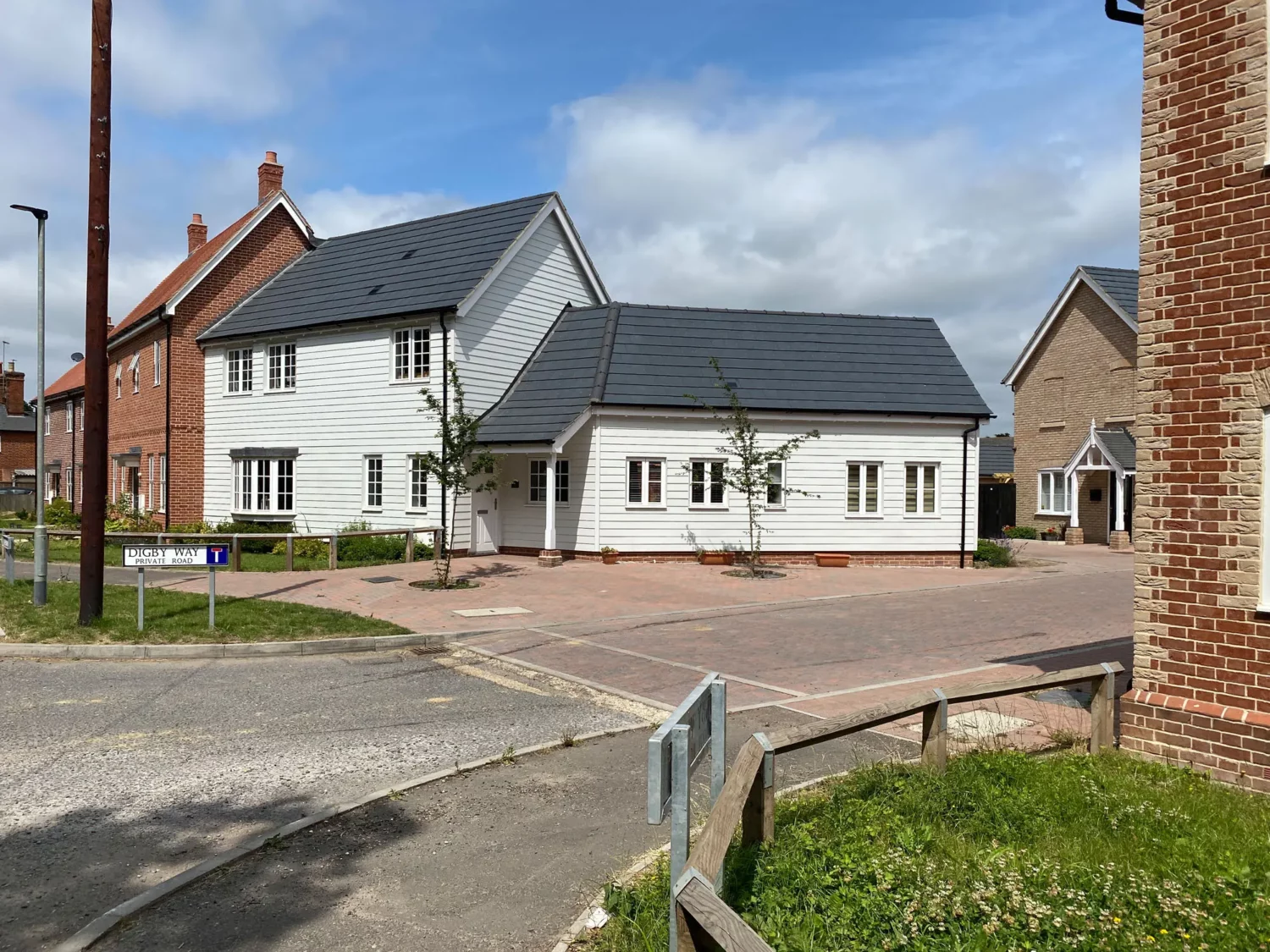
The design responds to the historic grain and vernacular of the village.
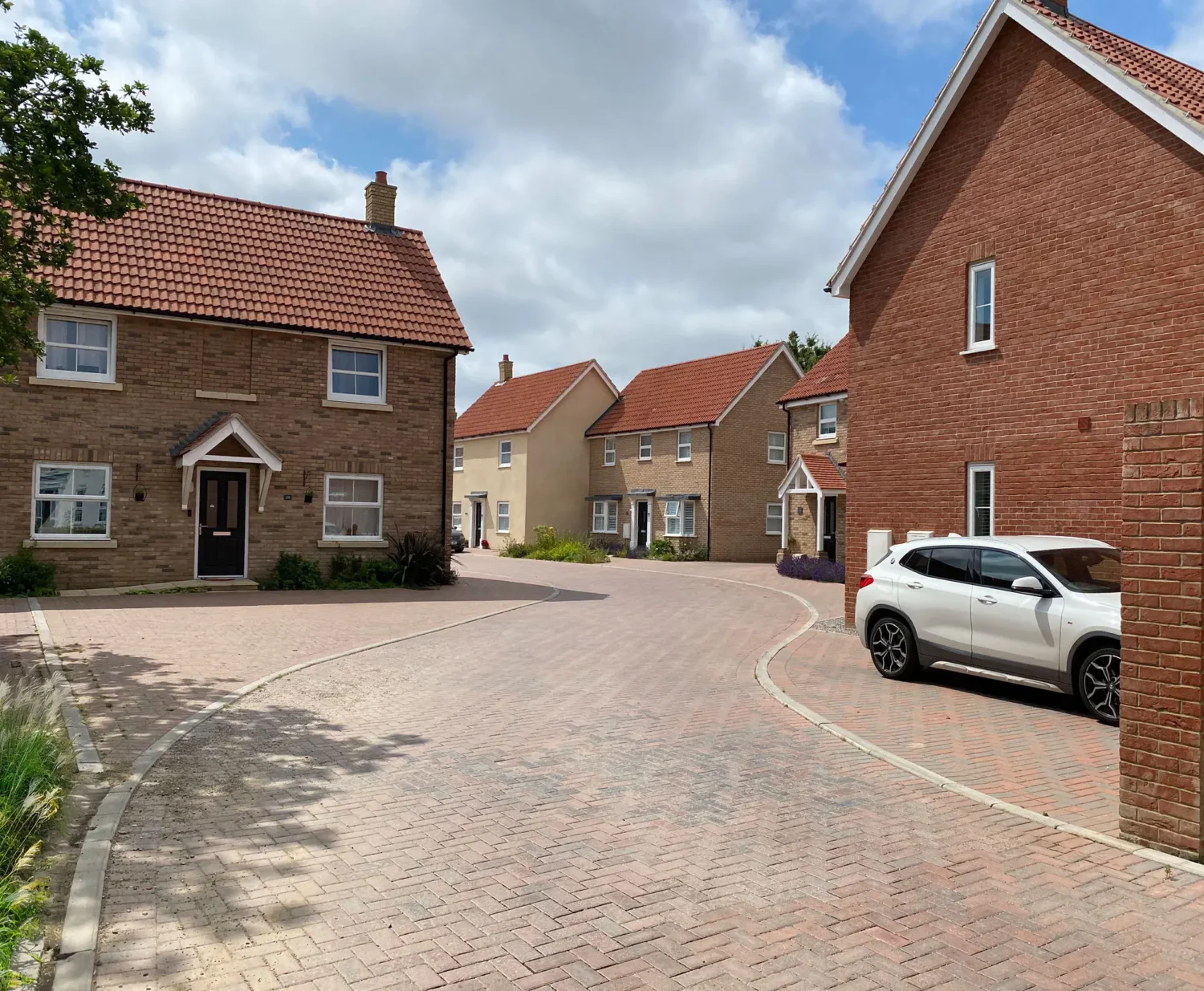
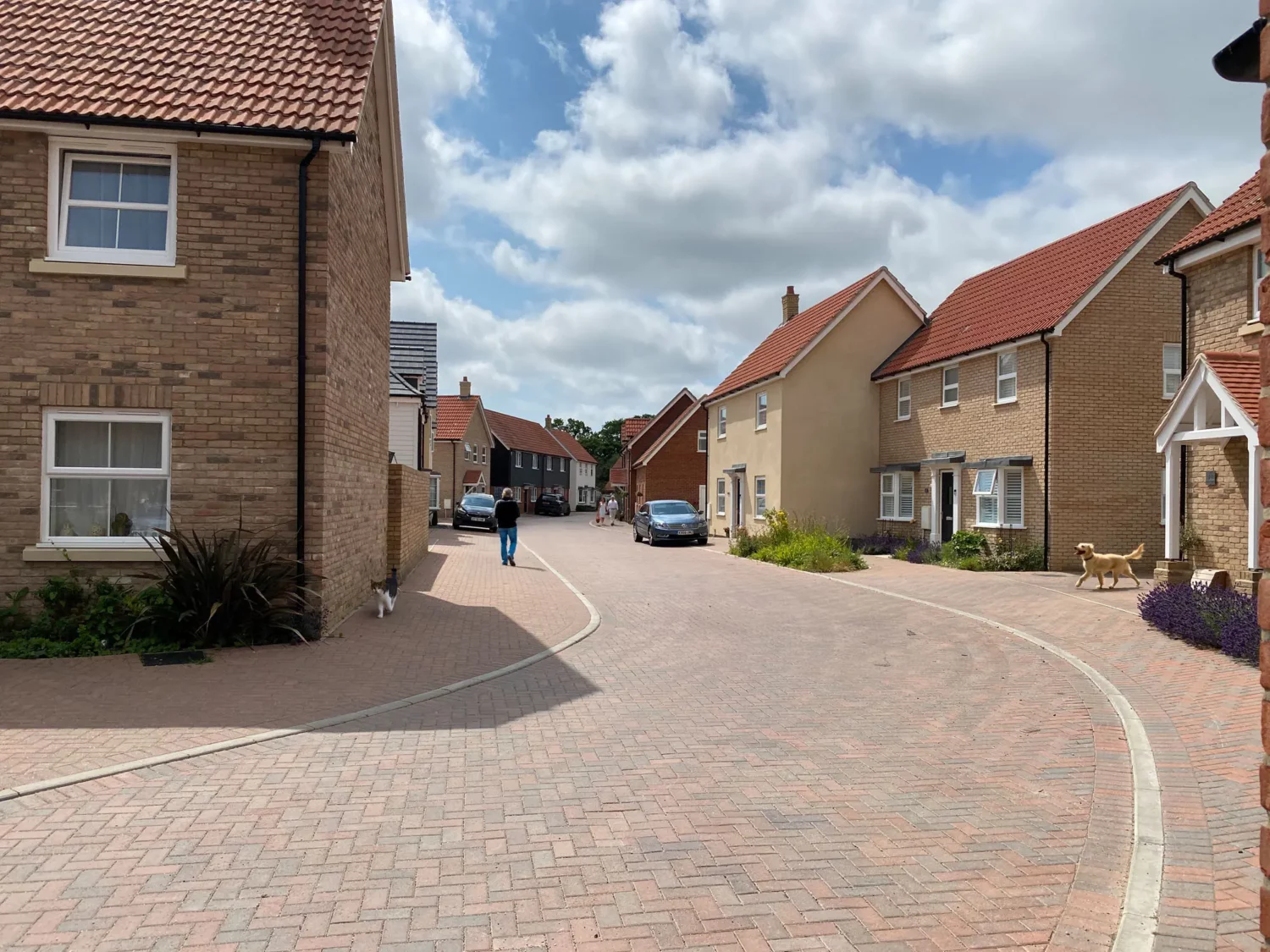
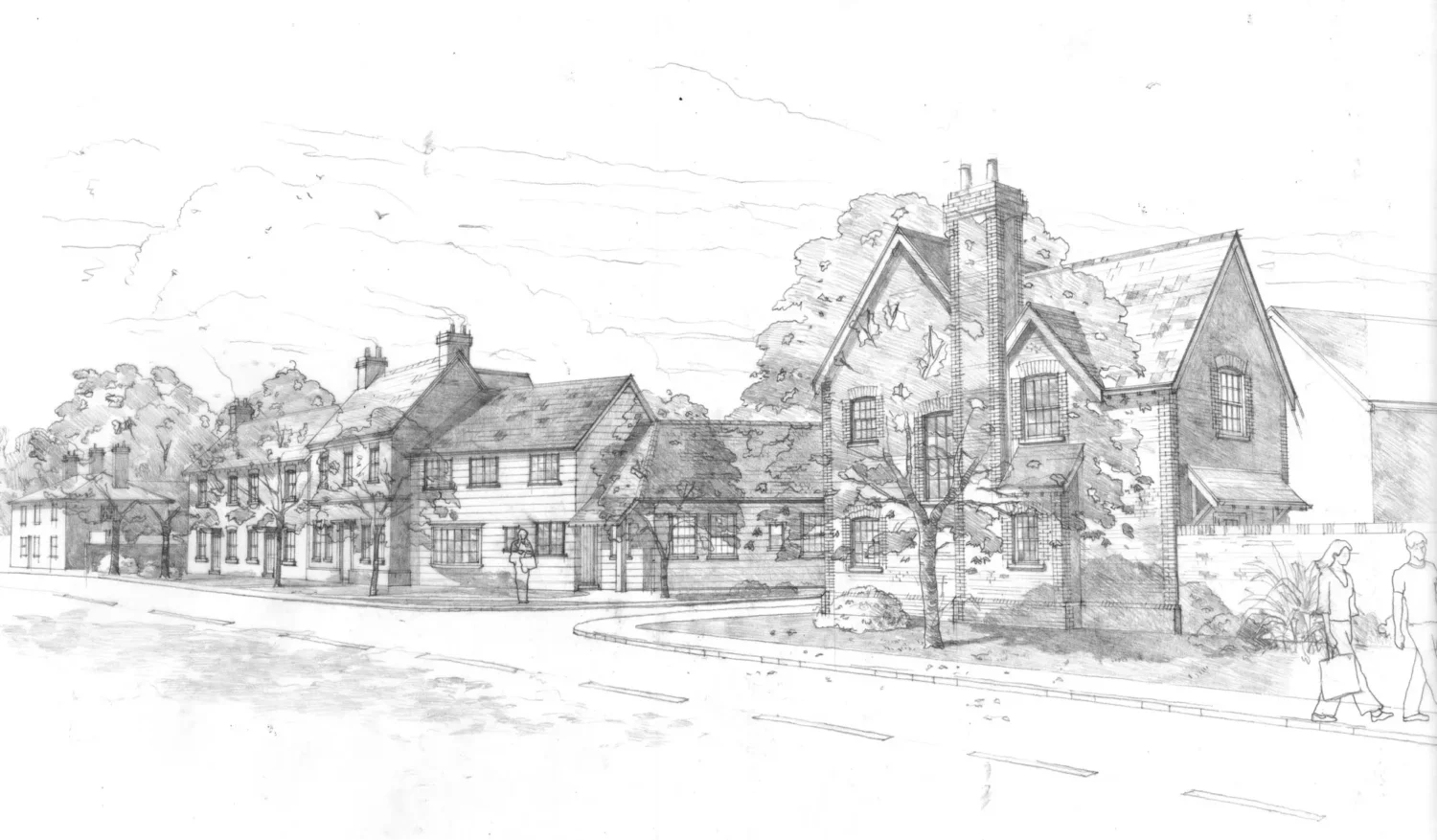
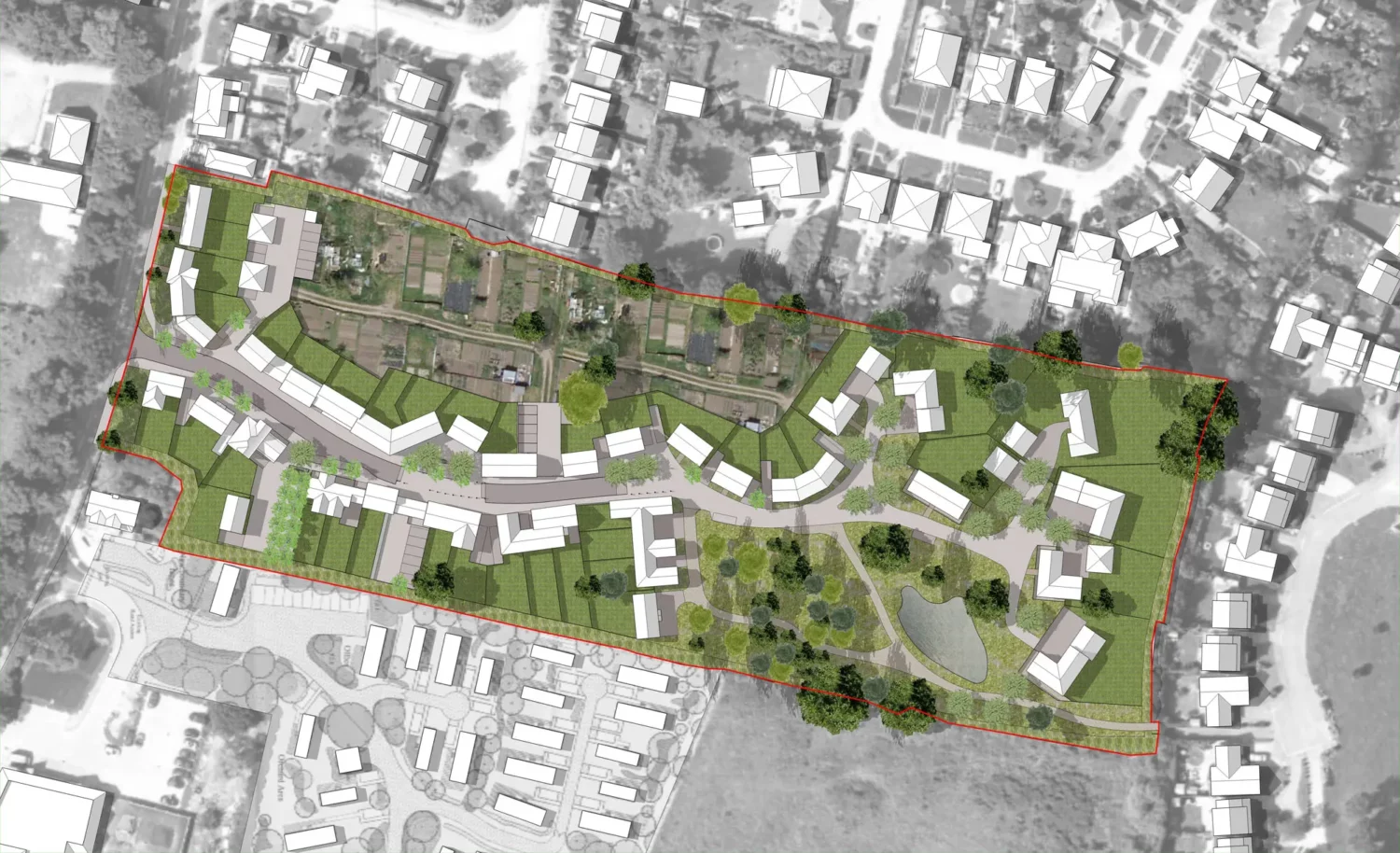
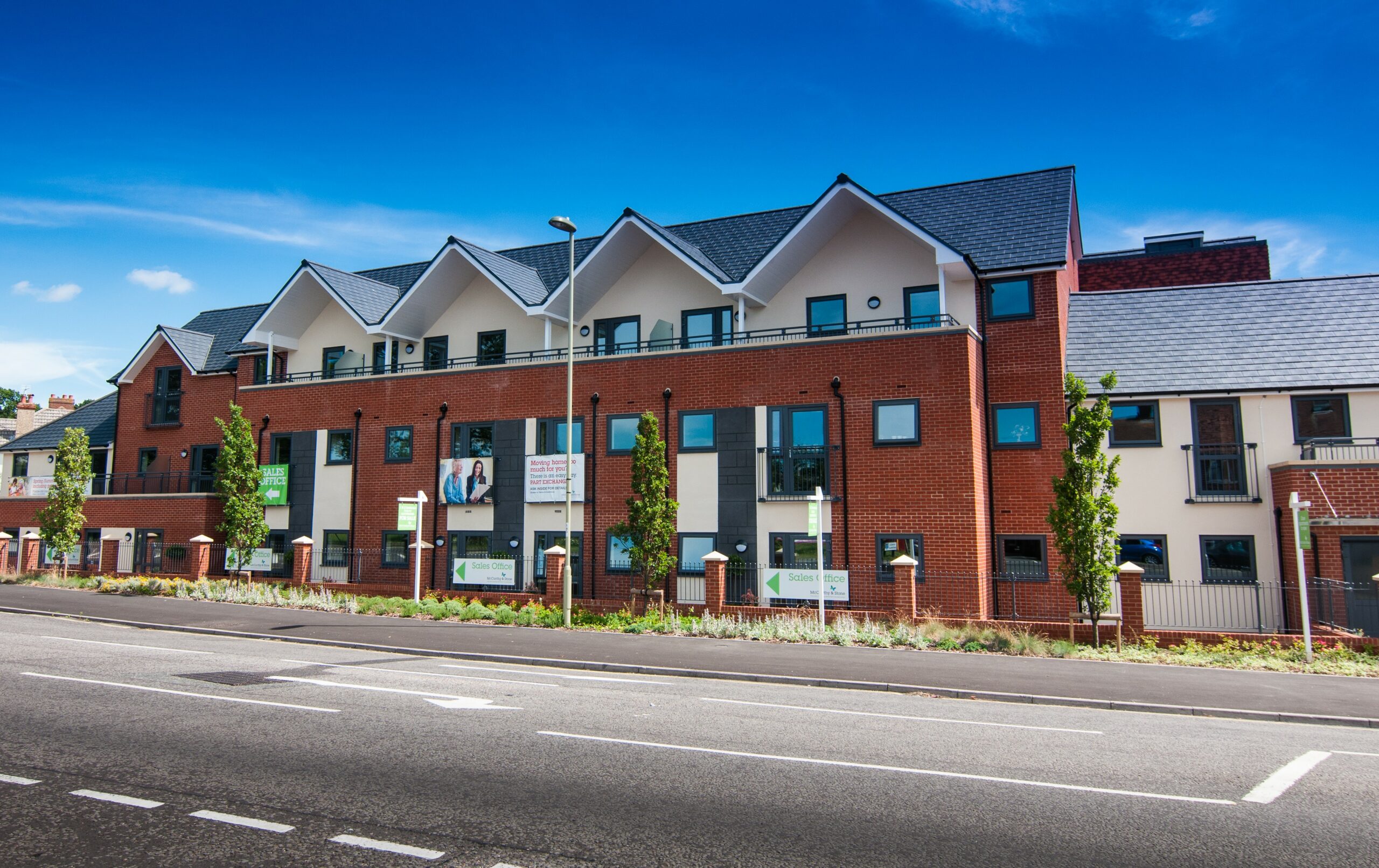
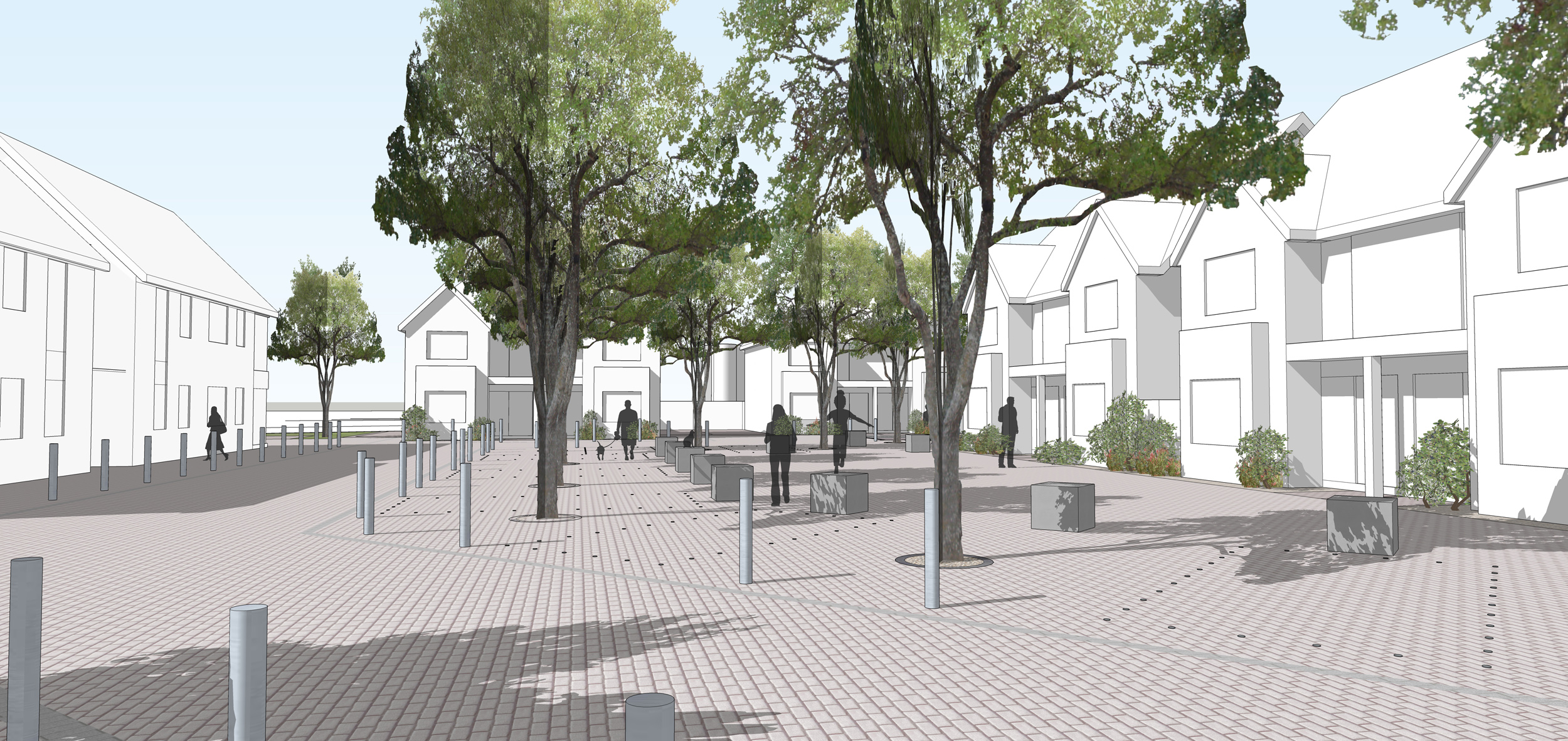
The scheme draws on the principles set out in the Essex Design Guide, responding to the historic grain and vernacular of the village centre to the west. The layout follows the form of a traditional village street, with wide-fronted homes positioned close to the pavement, reinforcing a sense of enclosure and creating a strong, coherent streetscape.
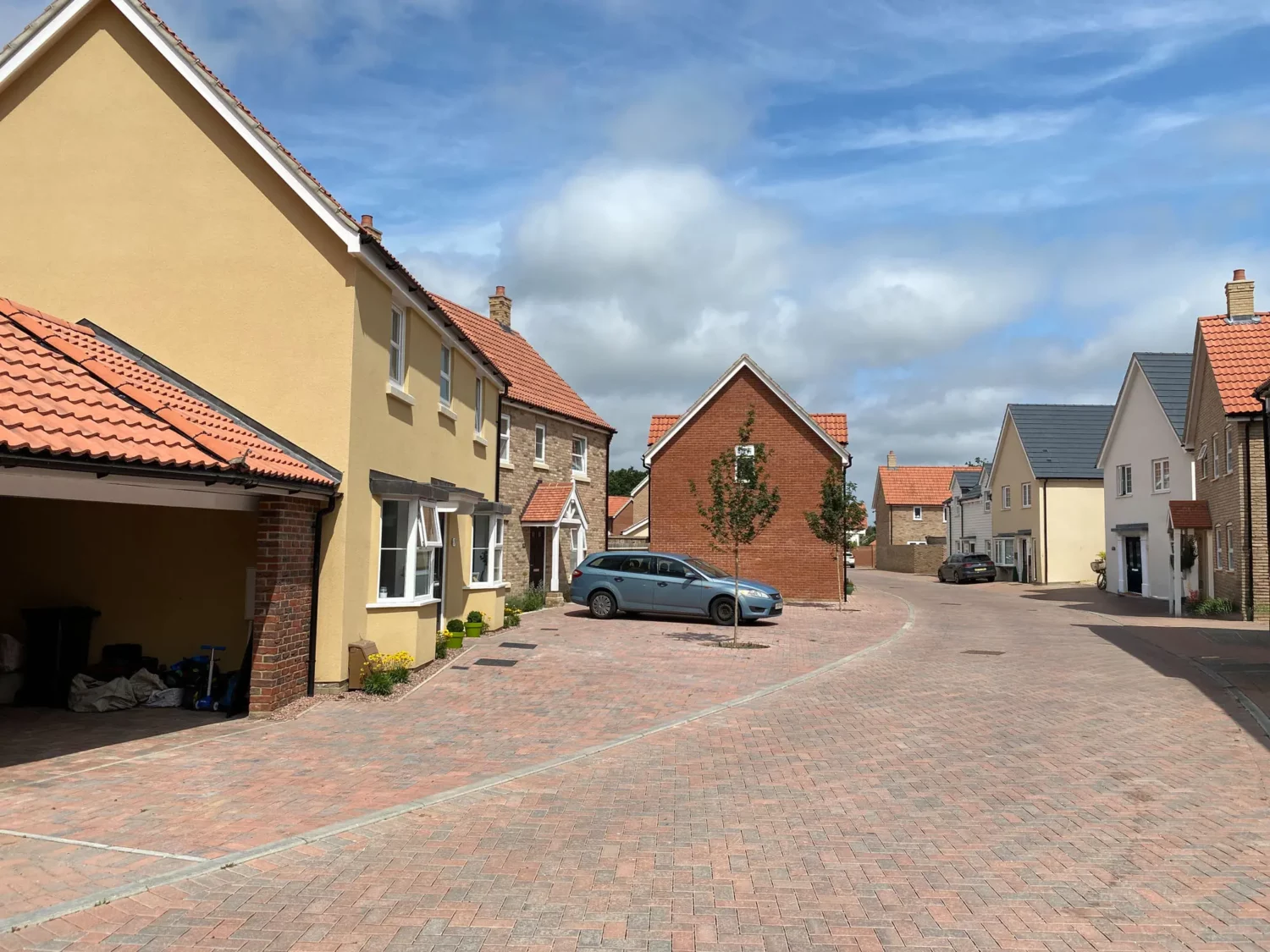
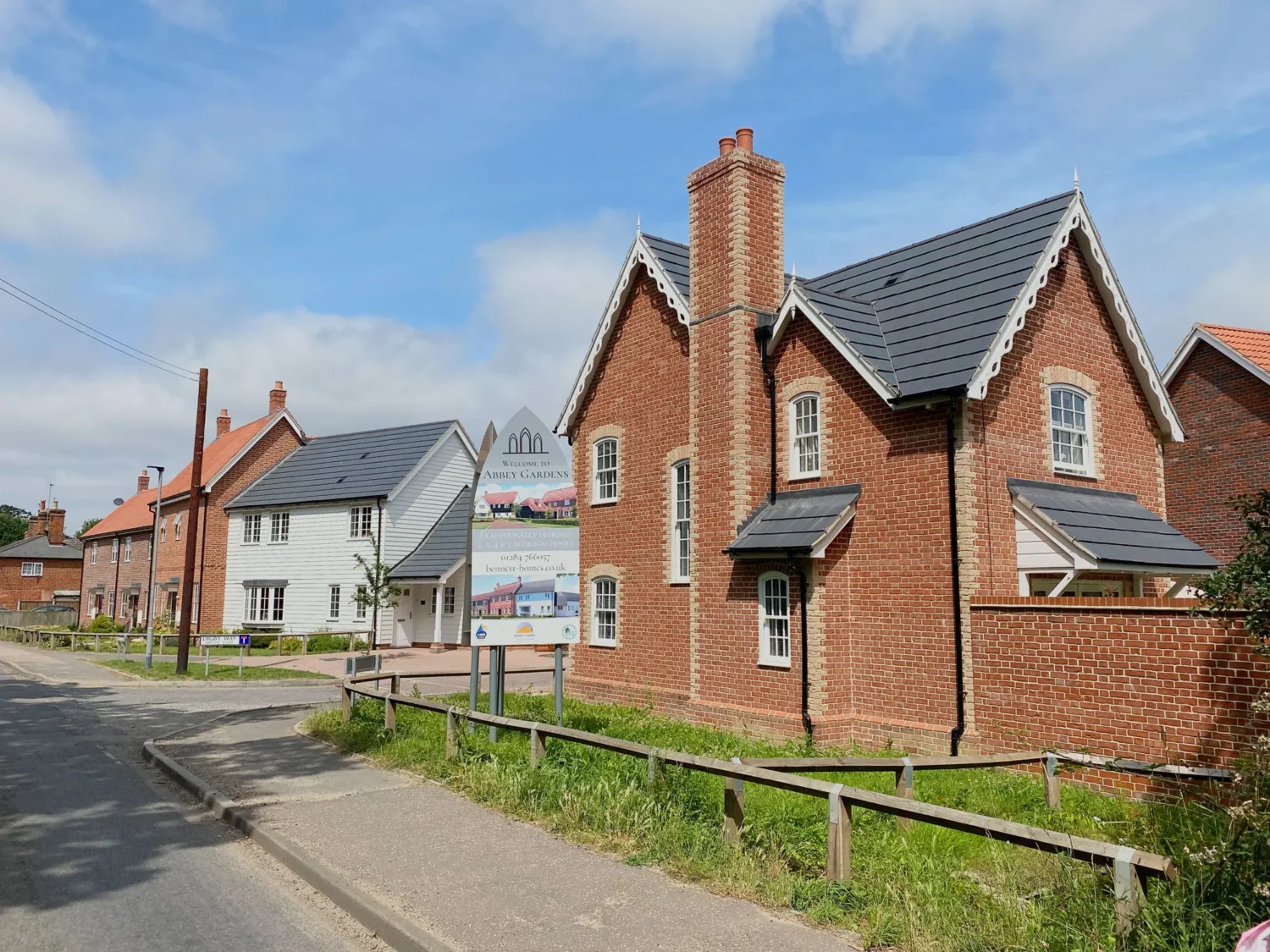
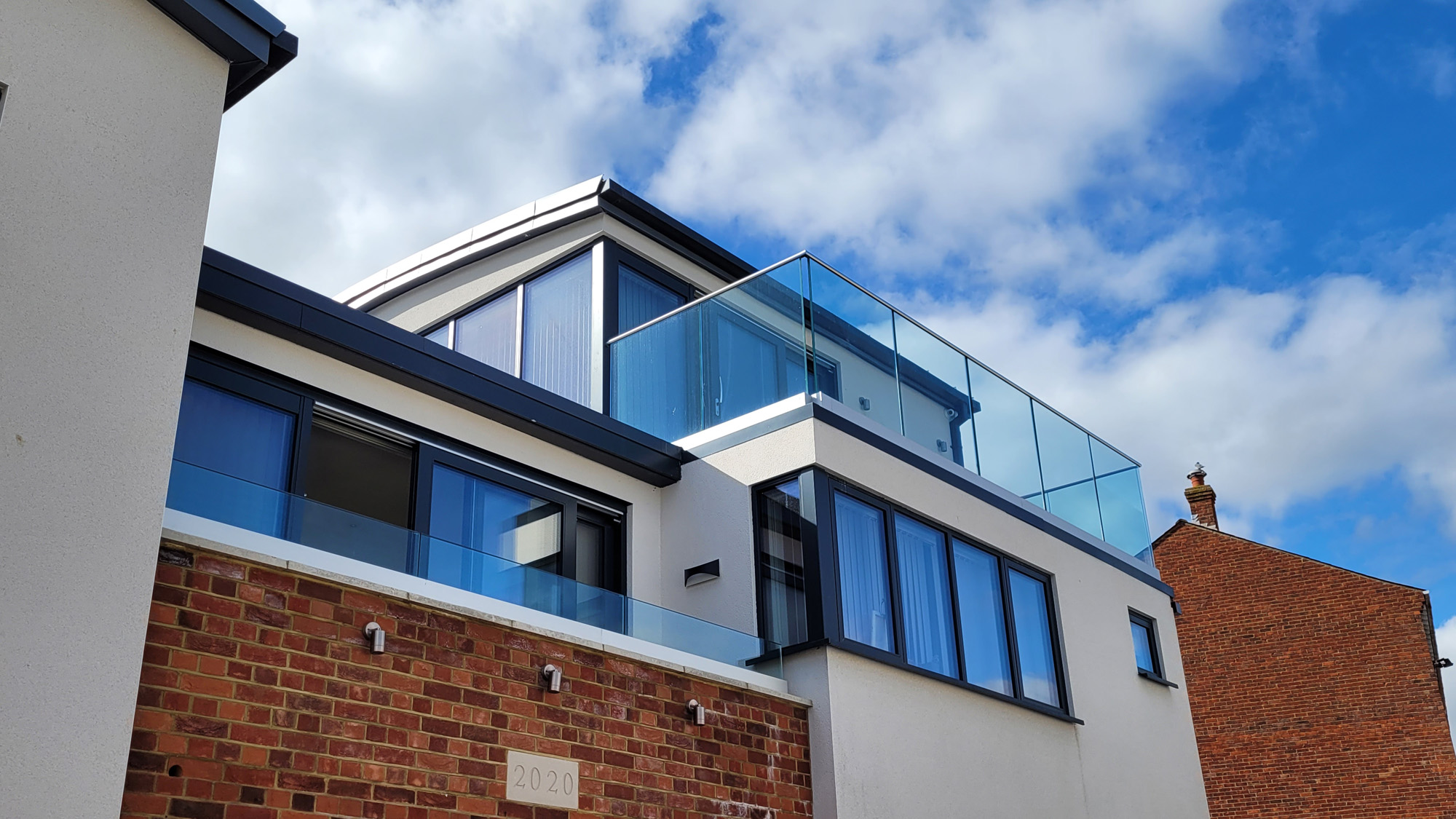
Variation in building form—through differing ridge heights, eaves lines, roof pitches, materials, and architectural detailing—references the diverse character of the village’s historic core.
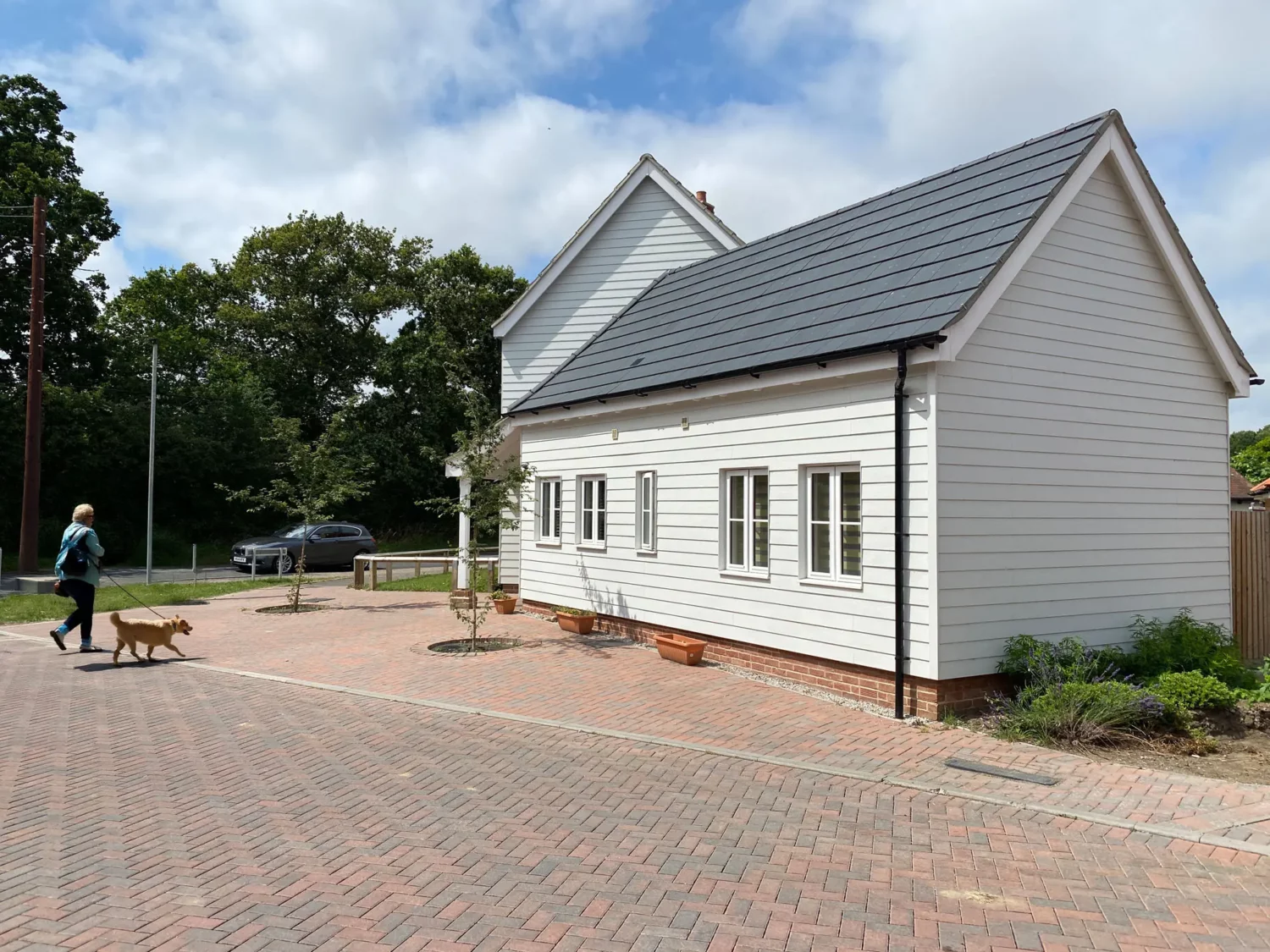
The site’s frontage lies within the Thorpe-le-Soken Conservation Area, and great care has been taken to ensure that new development contributes positively to its character. A terrace of varied dwellings maintains a traditional rhythm, while a bespoke end-of-terrace house terminates the row with a distinctive architectural expression that marks the site’s entrance.
4000m² of allotments have been integrated into the scheme, providing valuable community growing space. Their layout, enclosed by the surrounding housing, ensures the area is safe, well-overlooked, and protected from antisocial behaviour, reinforcing its role as a positive social and ecological asset.
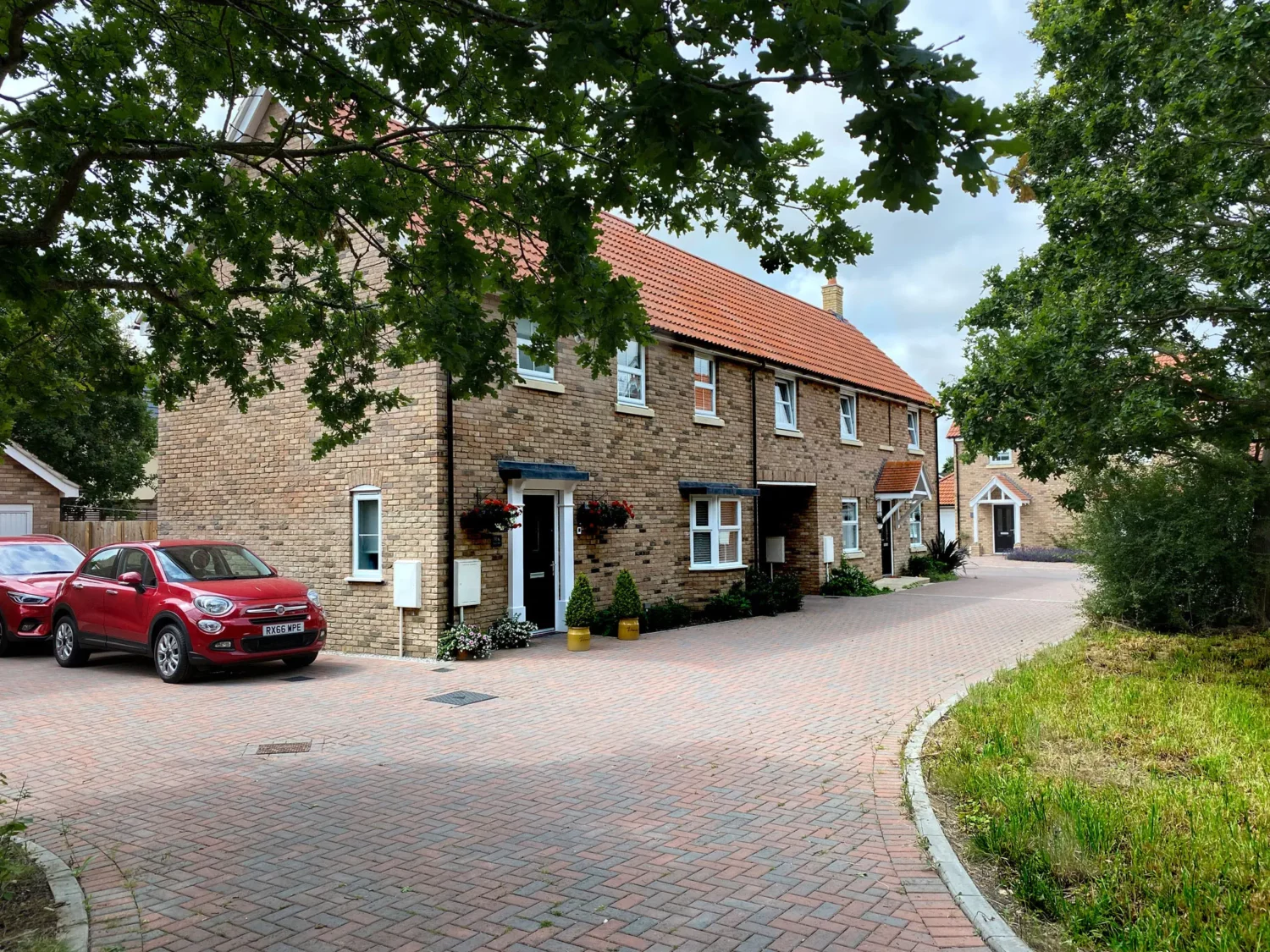
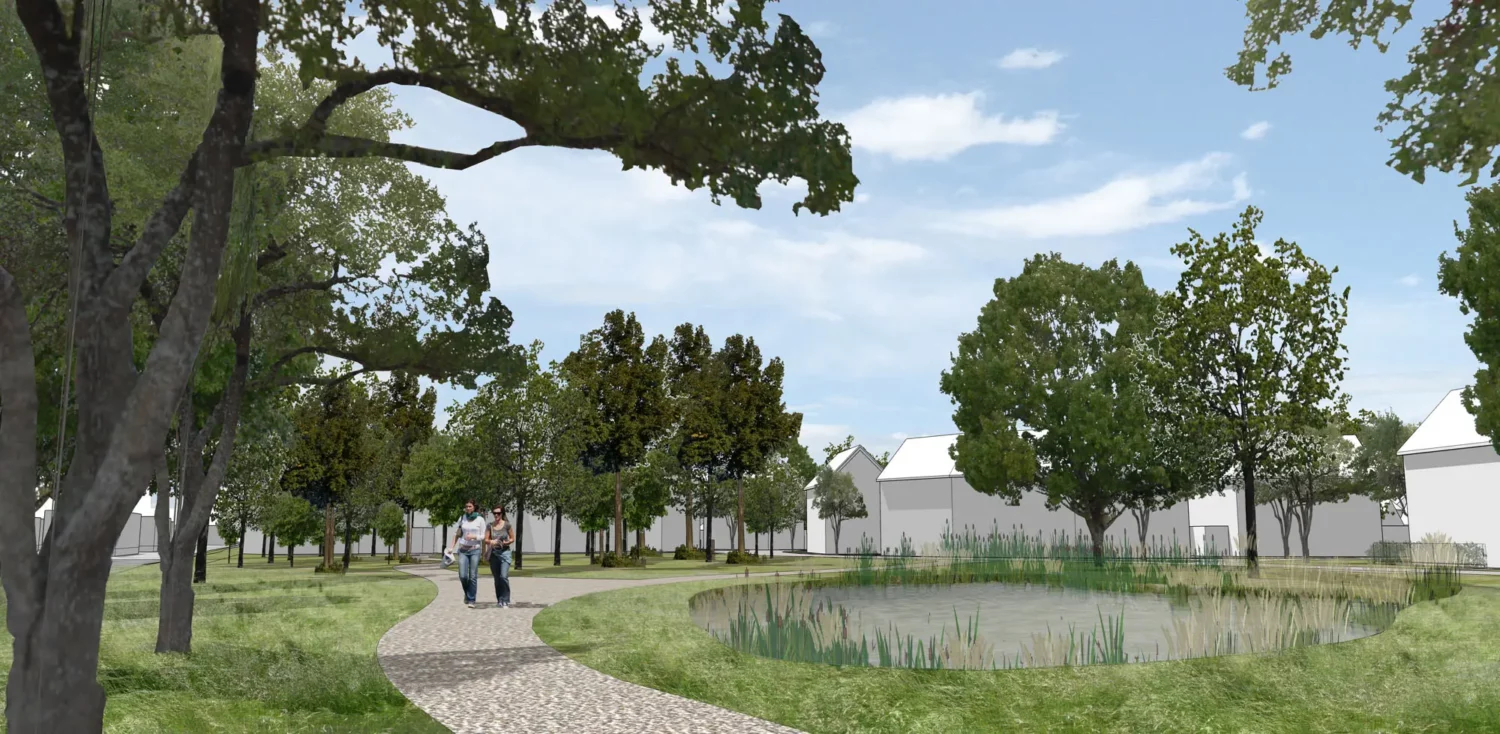
Pedestrian routes meander through the green, echoing rural paths and lanes.
Village and Rural Edge
The Village Street forming the heart of the development is a meandering, narrow street defined by closely set houses, directly addressing the pavement. This layout, following the traditional form of English villages, creates a sense of intimacy and enclosure, with changes to the building line opening up to paved squares and rear courtyards. The winding alignment limits long views, enhancing the sense of exploration and discovery, creating a strong sense of place.
The proximity of buildings ensures good natural surveillance and fosters a sense of ownership among residents to create a safe, sociable neighbourhood, the core of successful, sustainable placemaking.
The Rural Edge area in the north half of the site has a semi-rural character. Dwellings are loosely arranged around a central green space, creating a softer, more rural edge to the village. The absence of a formal building line allows the landscape to flow between homes, blurring boundaries between urban and rural spaces.
This green has been conceived as a biodiverse habitat featuring wildflower meadows, a natural pond, and informal footpaths that echo the feel of rural lanes and tracks. Informal pedestrian routes meander through the space, echoing rural paths and lanes, while vehicular routes gently taper into footways, dissolving the hard edge of infrastructure into the landscape. A dedicated newt run links the pond to a wider ecological network, supporting protected species and enhancing the site’s environmental credentials.