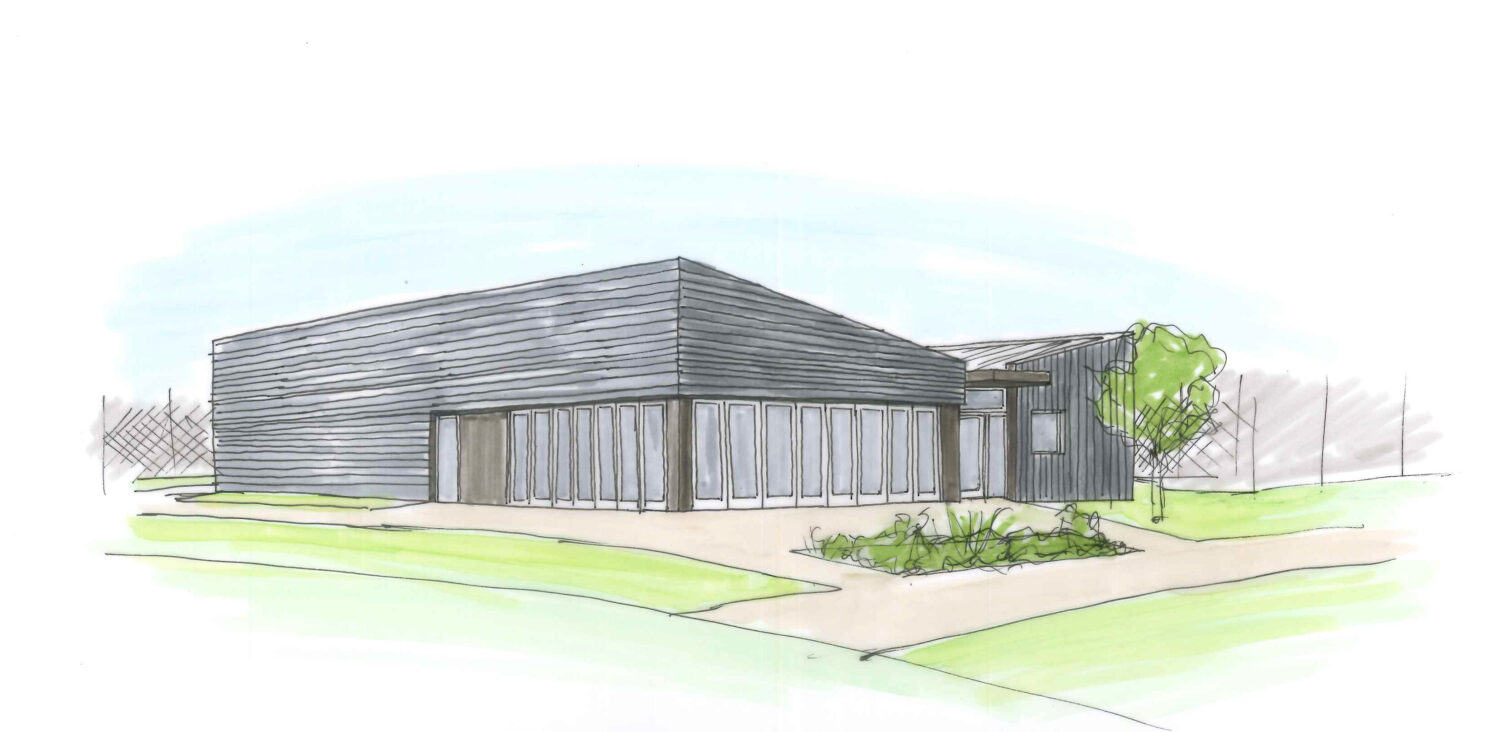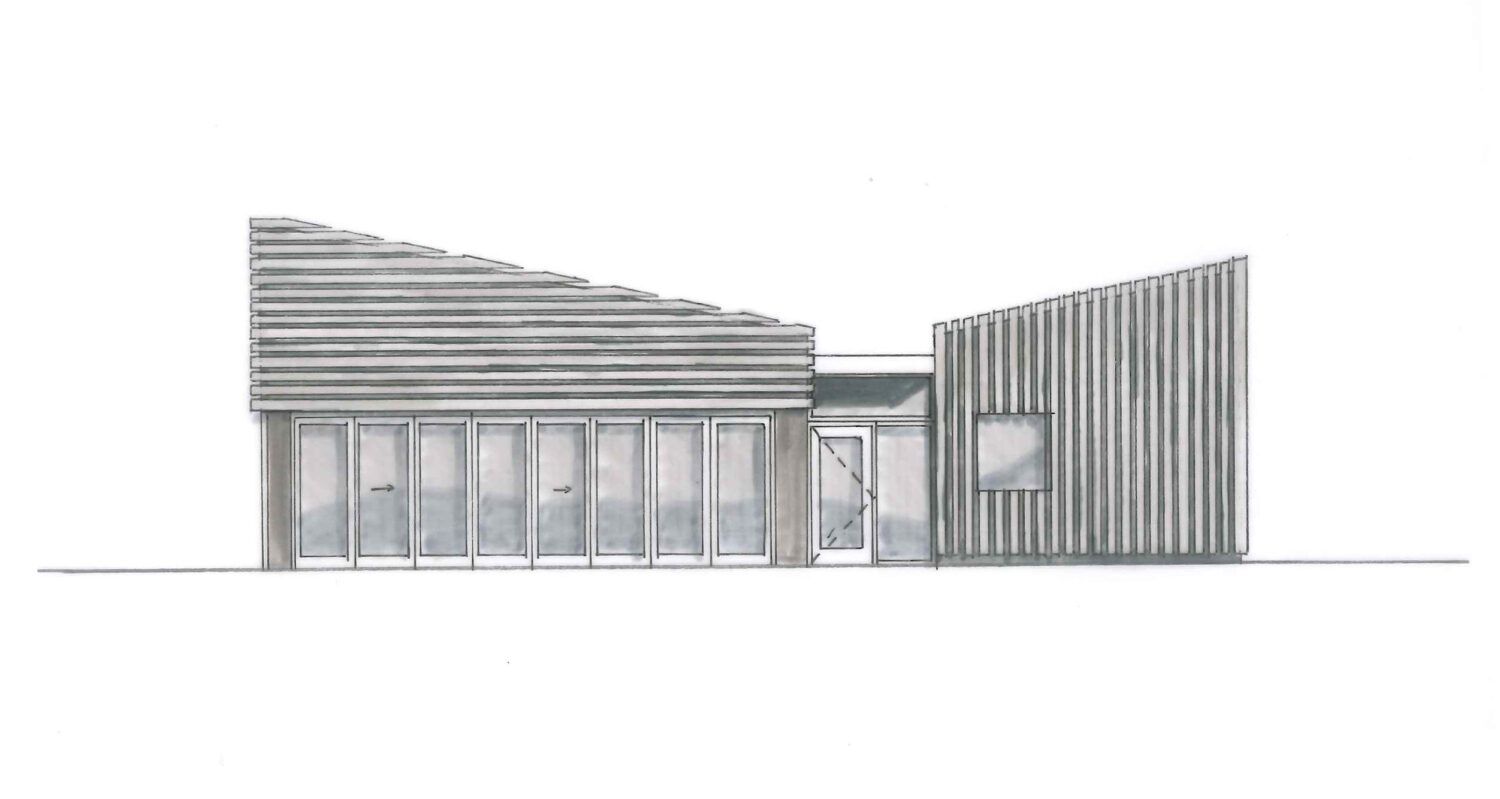

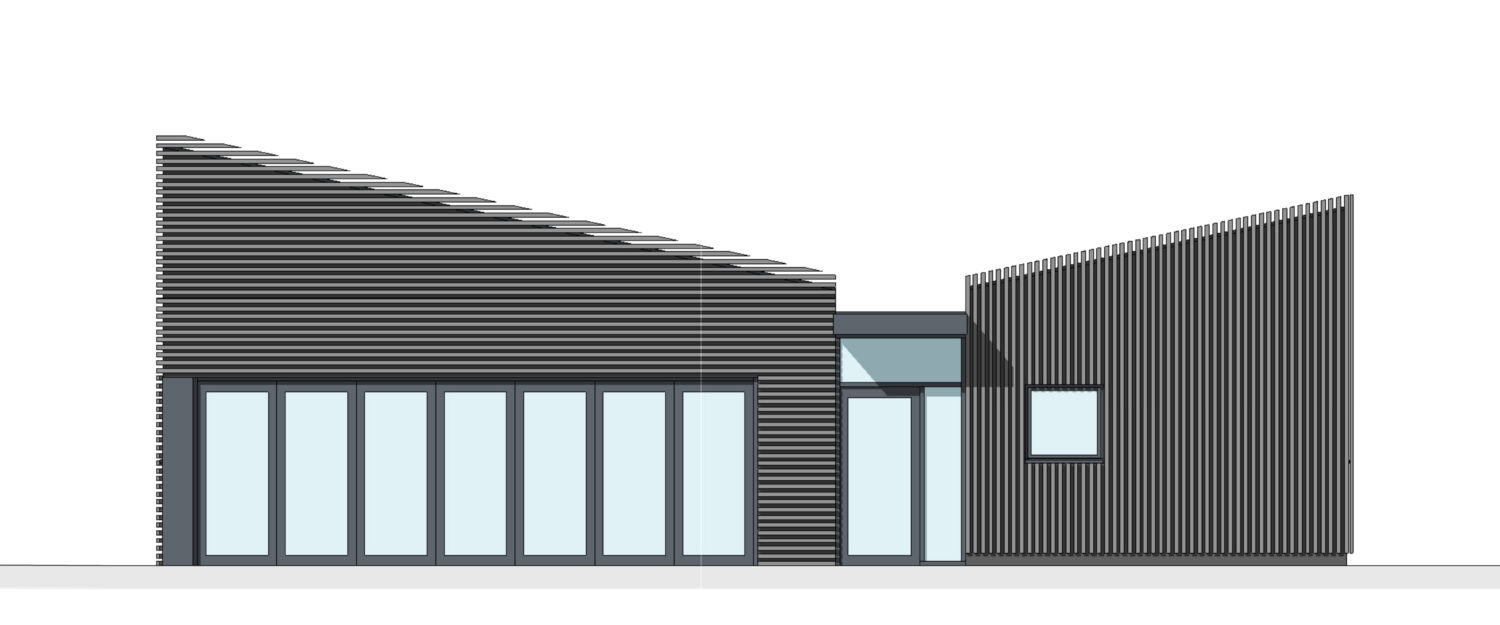
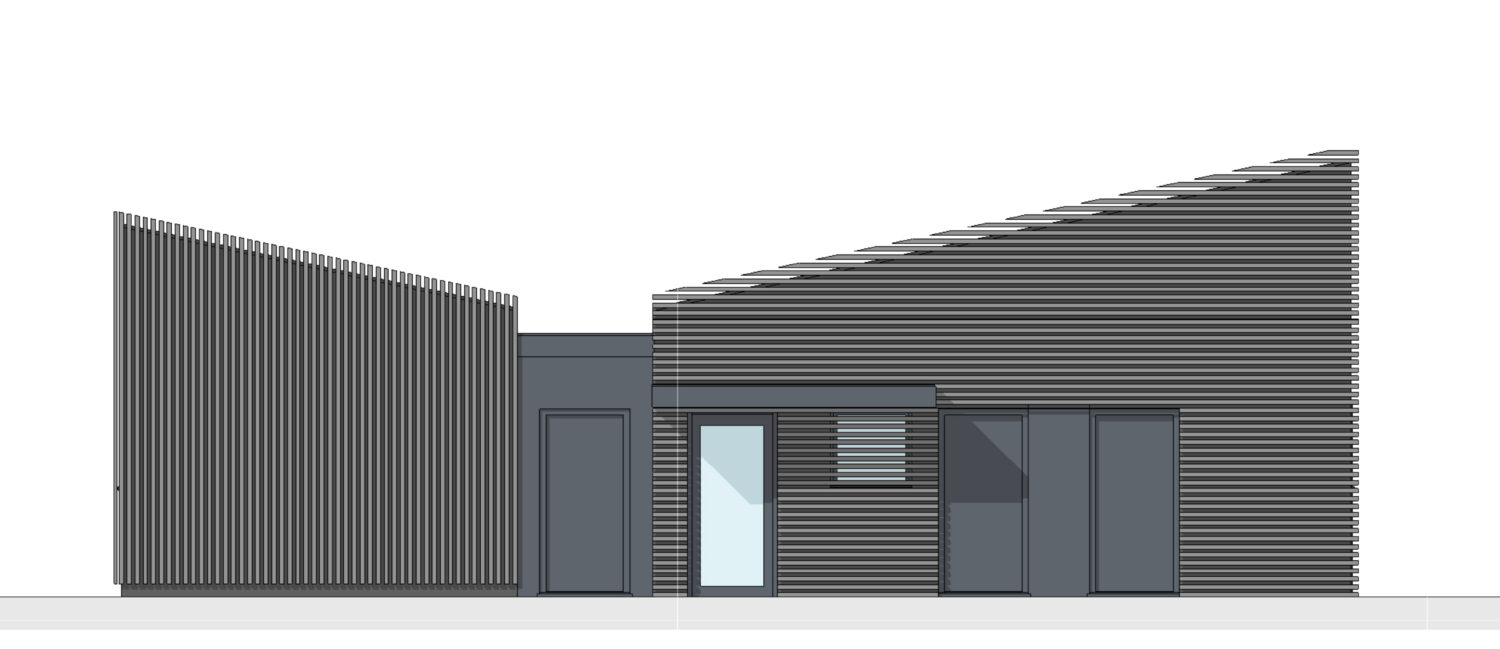
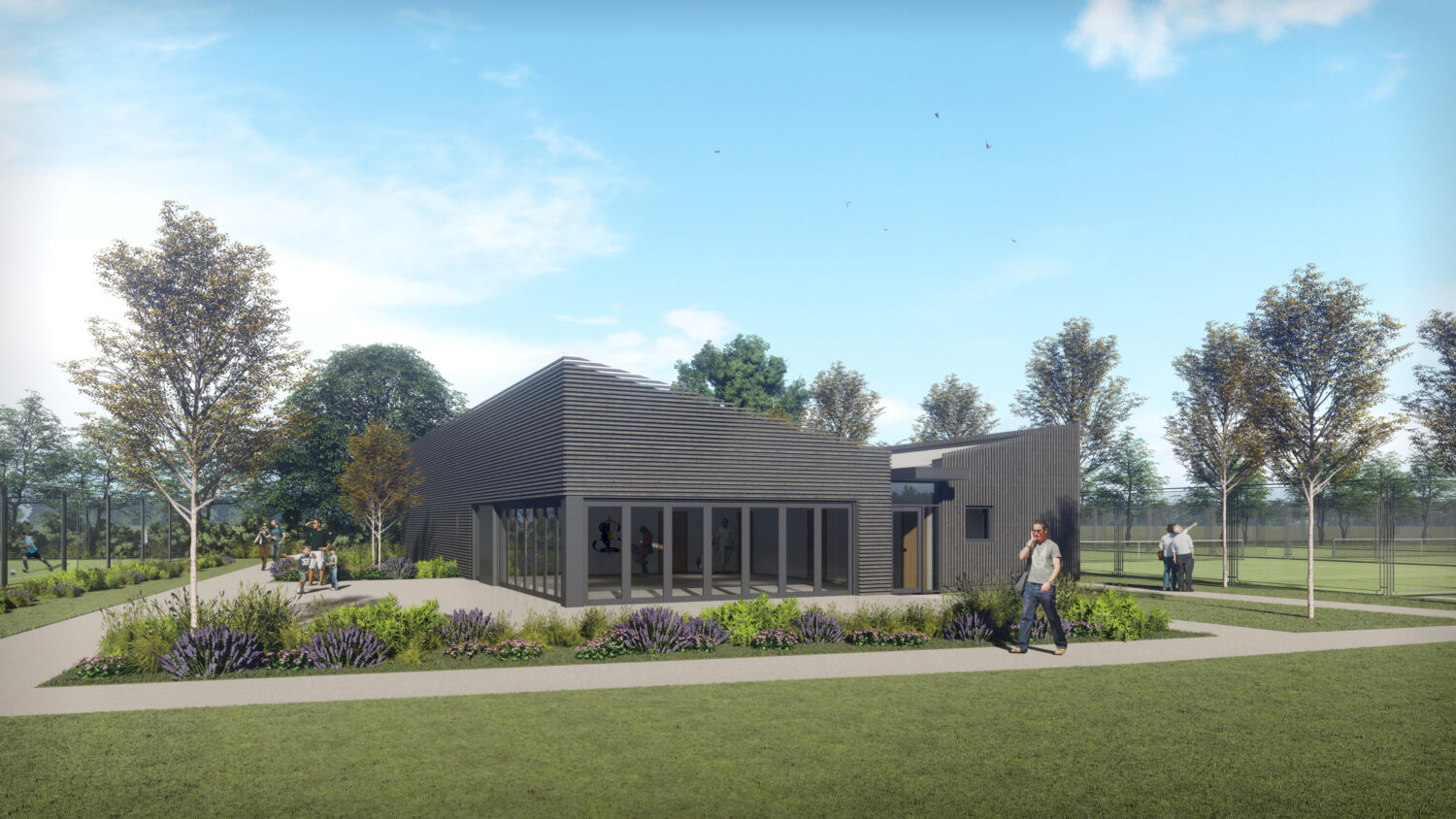
The building is defined by a striking butterfly roof design, visibly rising toward the sports it serves.
A new sports facility to replace old facilities no longer fit for purpose
Williams Lester was commissioned to design a new sports pavilion as the focal point of a wider regeneration of the Waterside community facilities in Fawley. Replacing a dilapidated and heavily vandalized structure, the new pavilion provides a safe, modern facility that gives local sports clubs space to grow while serving the broader community. The wider masterplan includes the demolition of redundant buildings to make way for new community gardens and landscaping.
Layout and Functionality
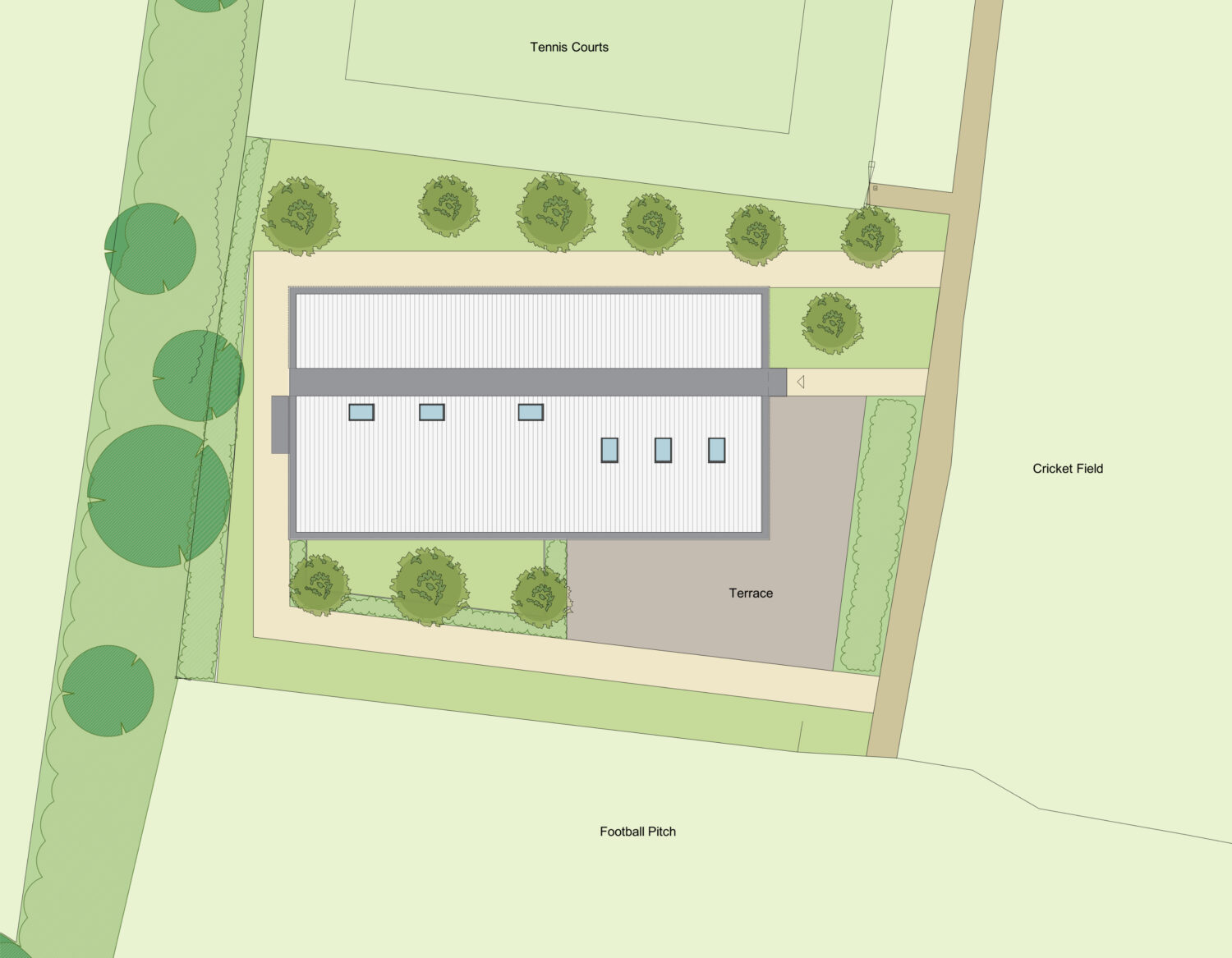
The pavilion is arranged to maximize its connection to the surrounding sports activities. The new bar and main social space are oriented toward the adjacent football pitch and cricket pitch. Large, full-height corner windows offer expansive views of the games from inside, while bifold doors allow the interior to seamlessly spill out onto an external terrace, expanding the functional space when the weather allows.
To maximize the building’s flexibility, changing facilities are concentrated at the rear. These are accessed via a dedicated entrance, allowing players to come and go without passing through the main bar area, allowing the main hall to be independently hired out for community events while sports activities are underway.
The new pavilion provides a safe, modern space that gives space for local sports clubs to grow.
Architectural Form and Materiality
The building is defined by a striking butterfly roof design, with roofs sloping back to a central wide gutter. This approach not only minimizes drainage points and simplifies maintenance but also gives the pavilion a dynamic aesthetic, its form visibly rising toward the sports it serves. The main entrance is marked by a glazed opening at the intersection of the two roofs, with a central flat roof projecting forward to shelter and highlight the doors.
The exterior of the pavilion is clad in composite boards offset from the walls and spaced to create a strong interplay of solid and void. This material choice offers significant practical benefits, being highly fire- and vandal-resistant to ensure the building’s longevity, while providing the striking visual texture of charred timber. To add further visual interest, the panels are oriented horizontally on one side of the building and vertically on the other, the materials separated by the central entrance, creating an engaging architectural contrast across the facade.