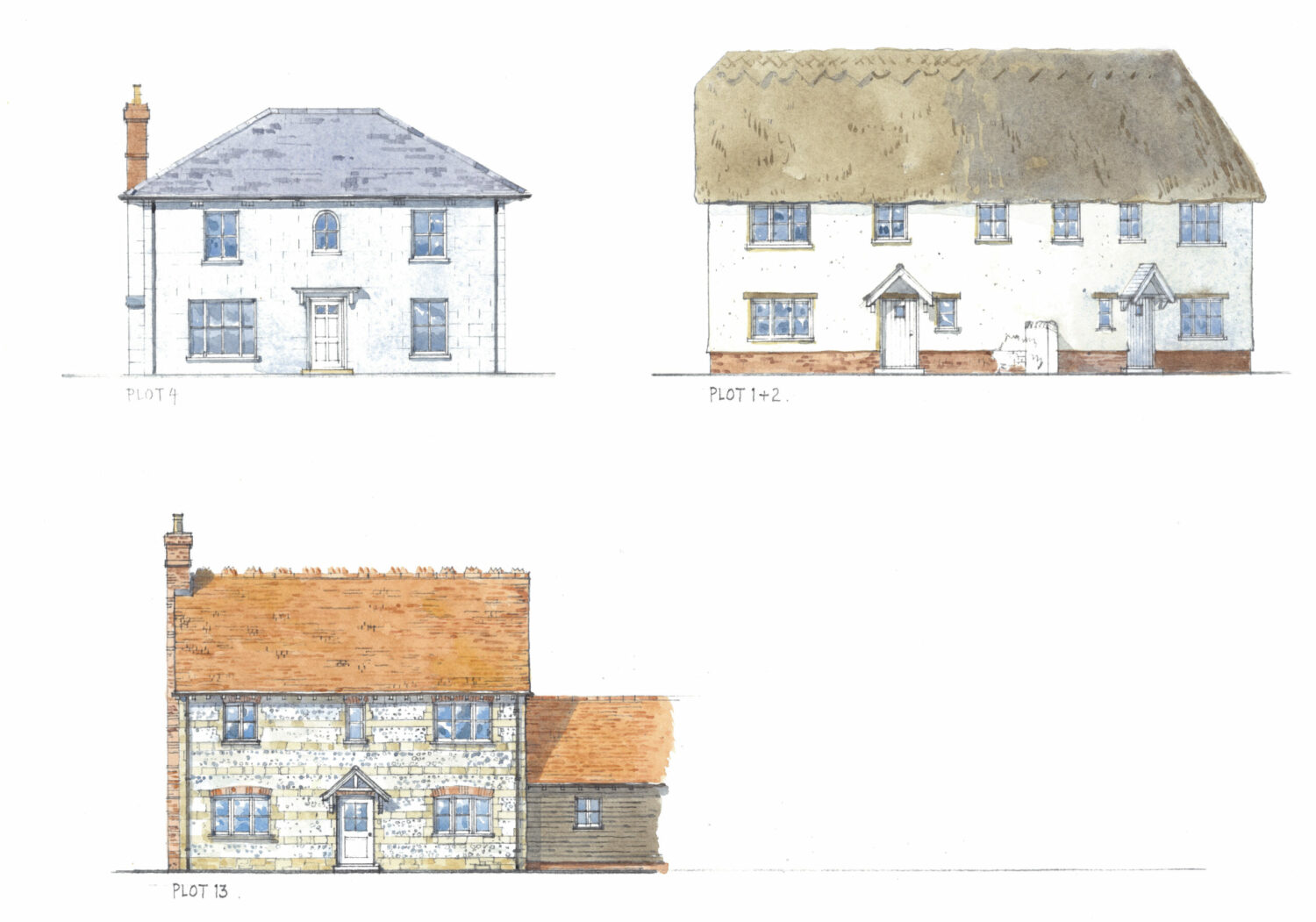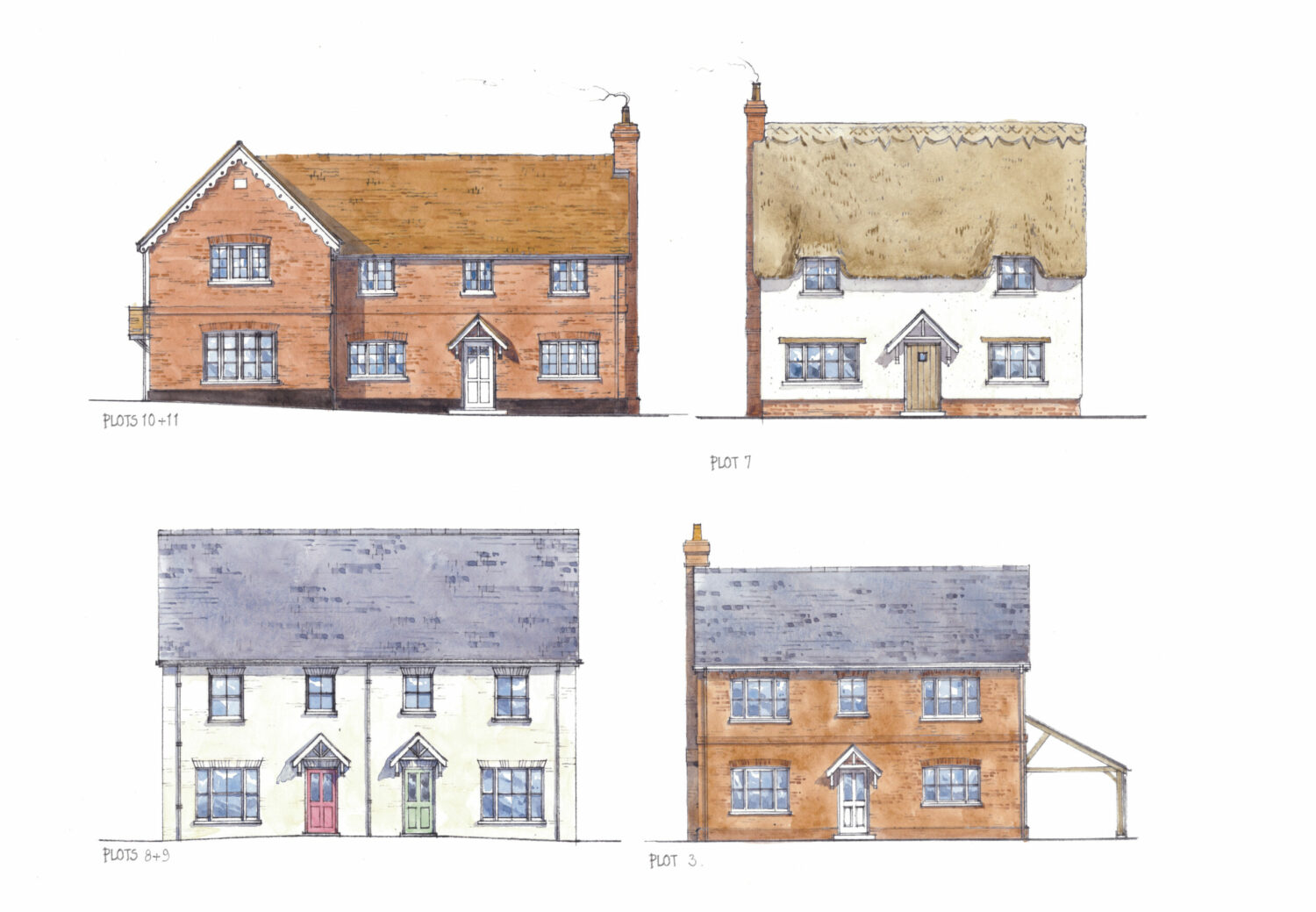

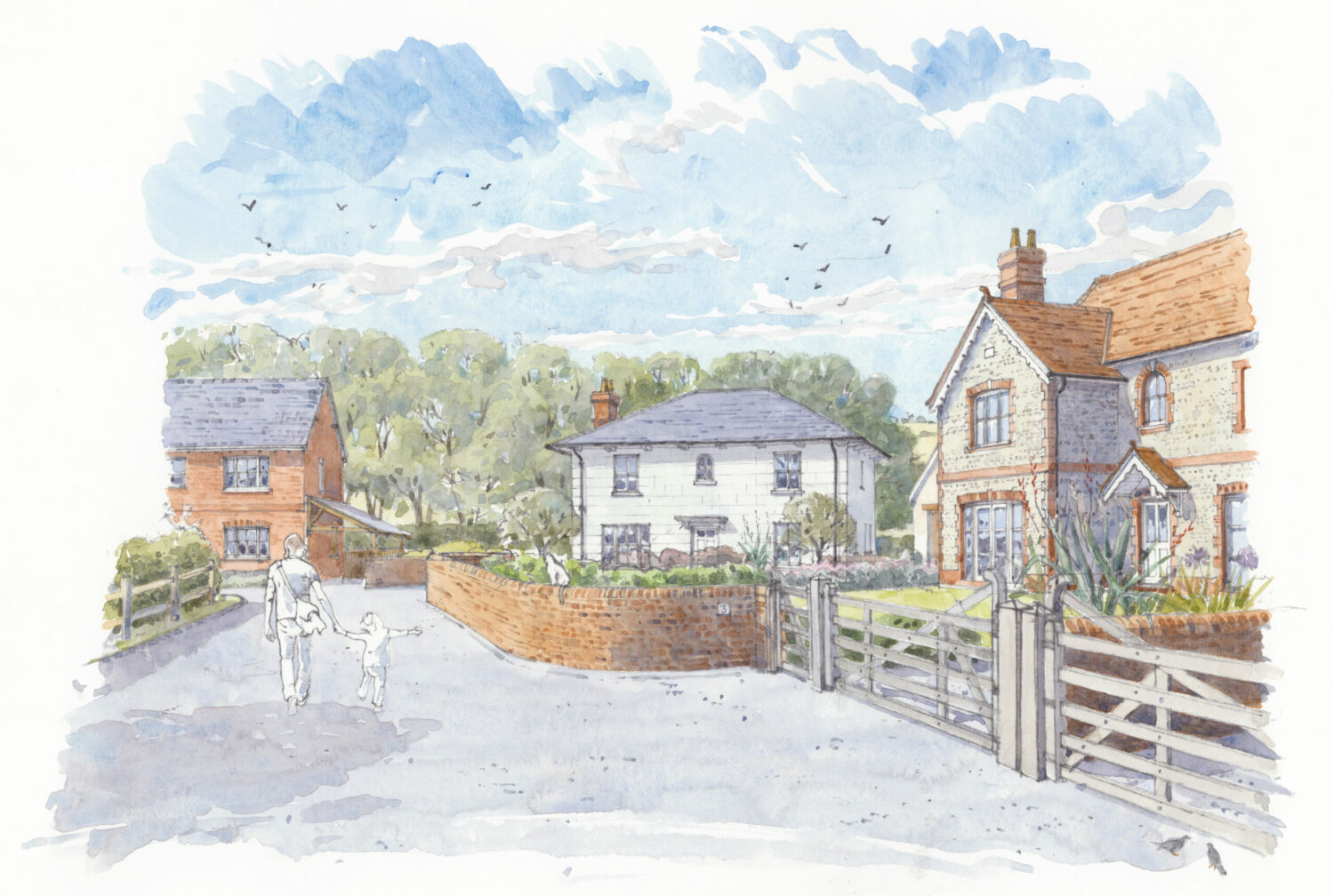
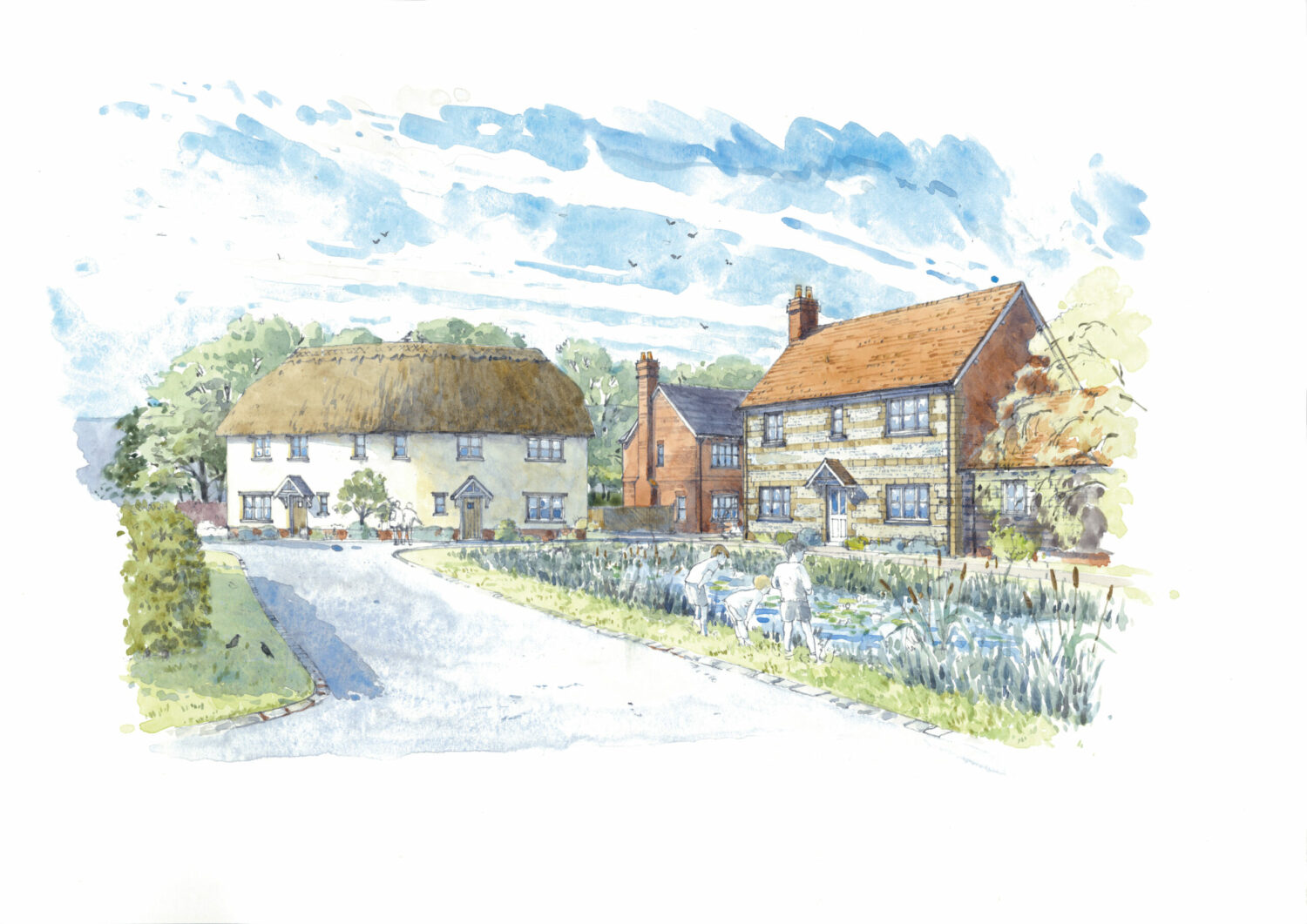
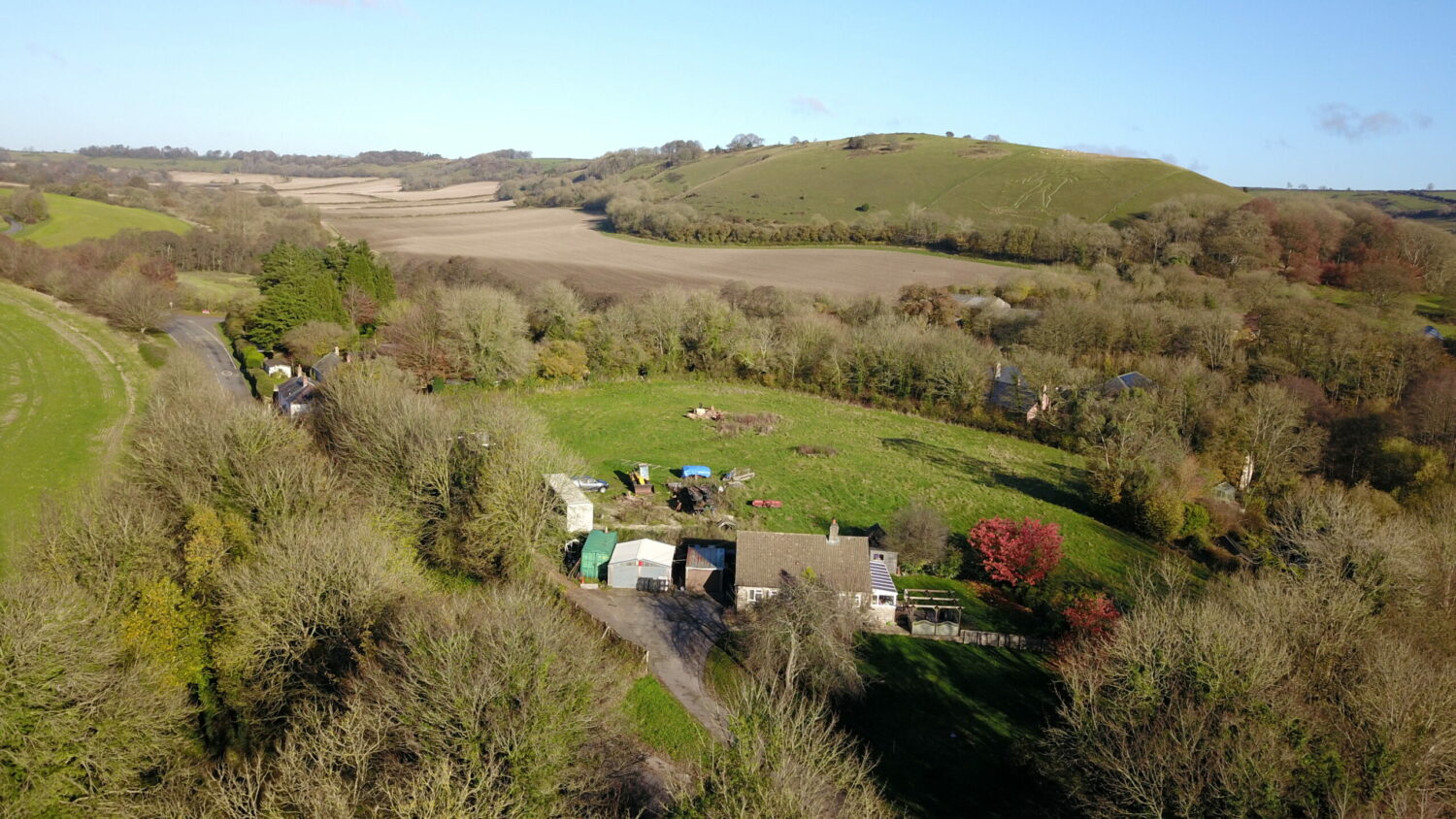
The design is intended to complement and sit comfortably within the rich and diverse architectural character.
Brief
The client brief stipulated a requirement for a scheme design that closely respected the traditional local vernacular styles of Cerne Abbas – a village known for its unspoilt and eclectic mix of period styles and materials. The elevated and open setting of this rural site on a redundant field presented an opportunity to maximise views across the surrounding countryside, whilst also retaining a sense of seclusion and privacy.
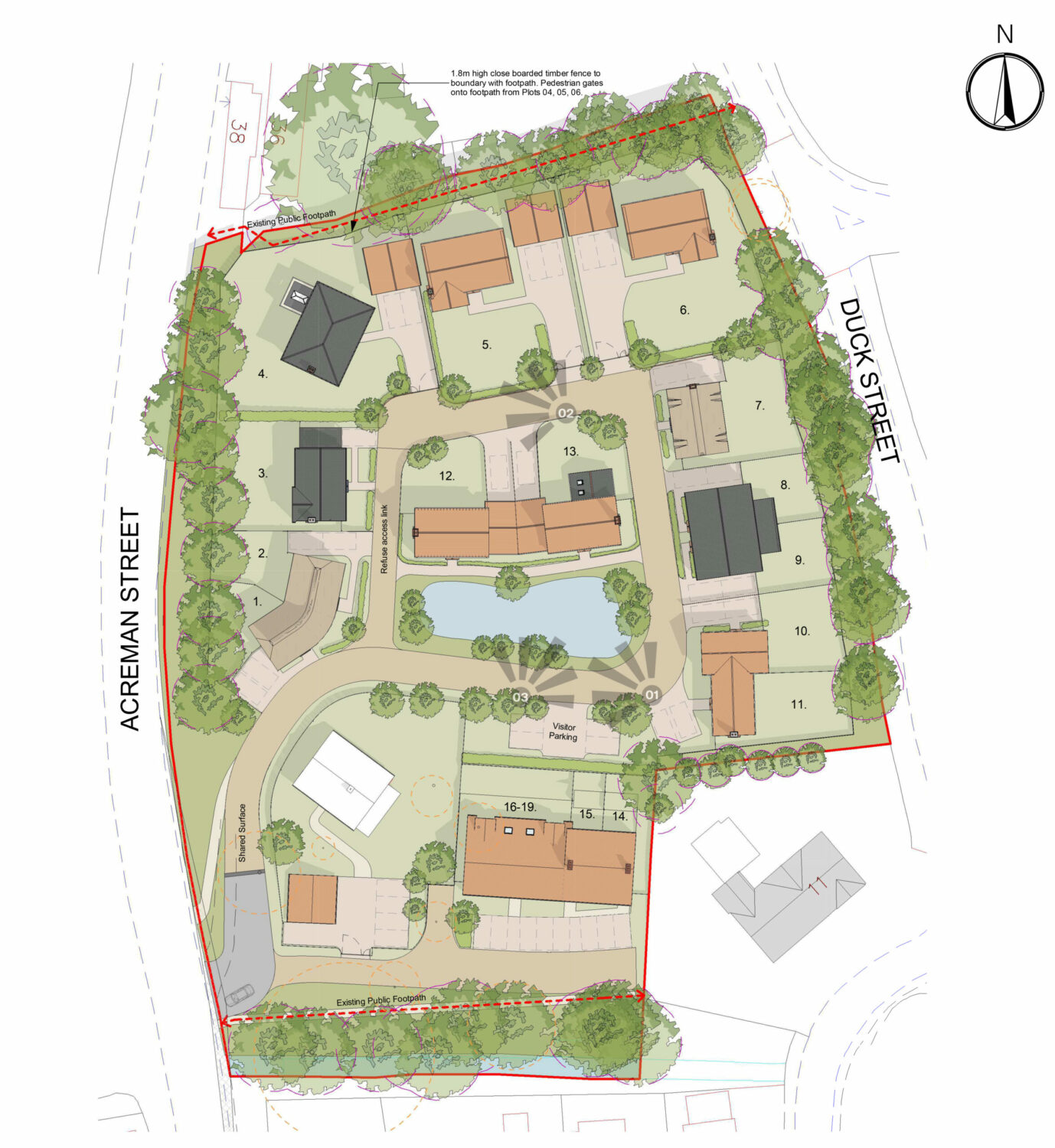
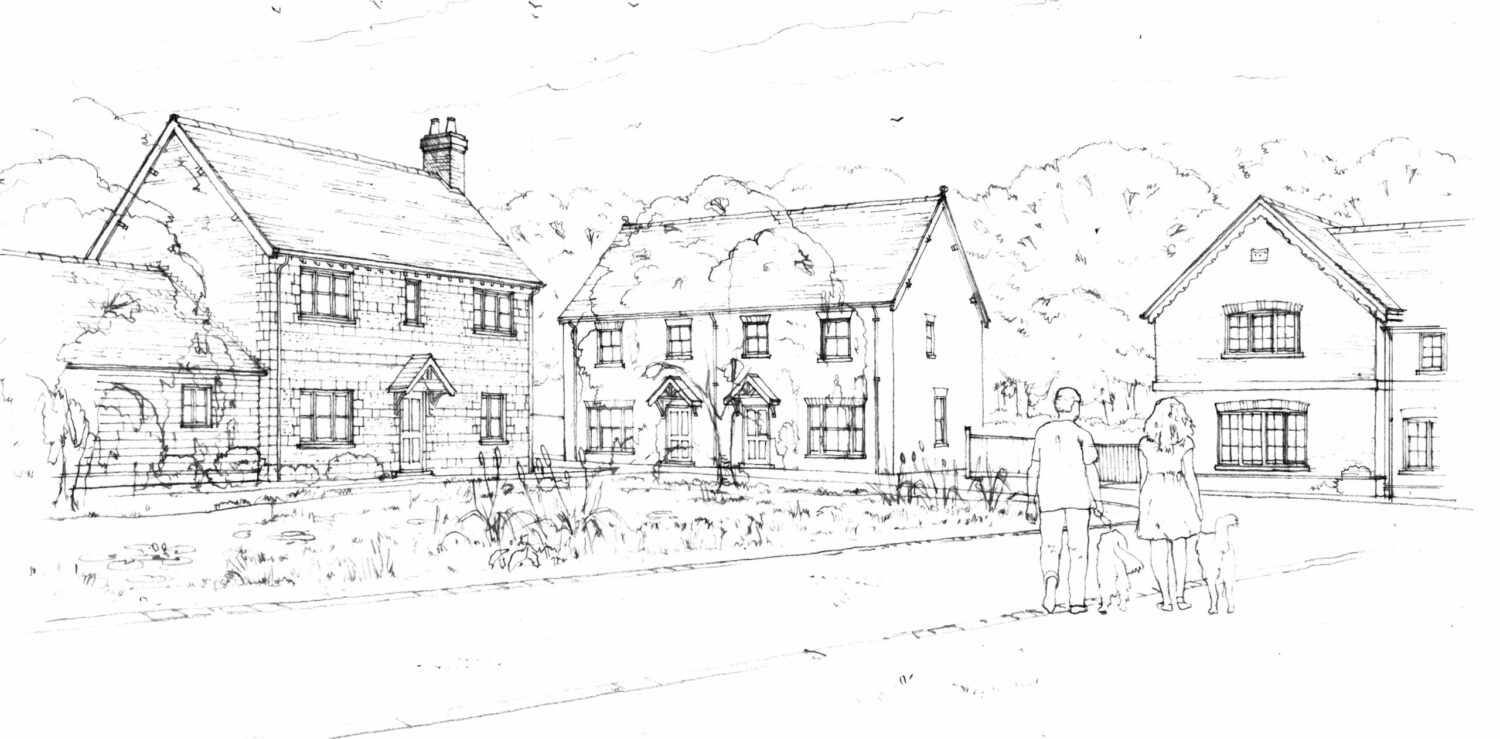
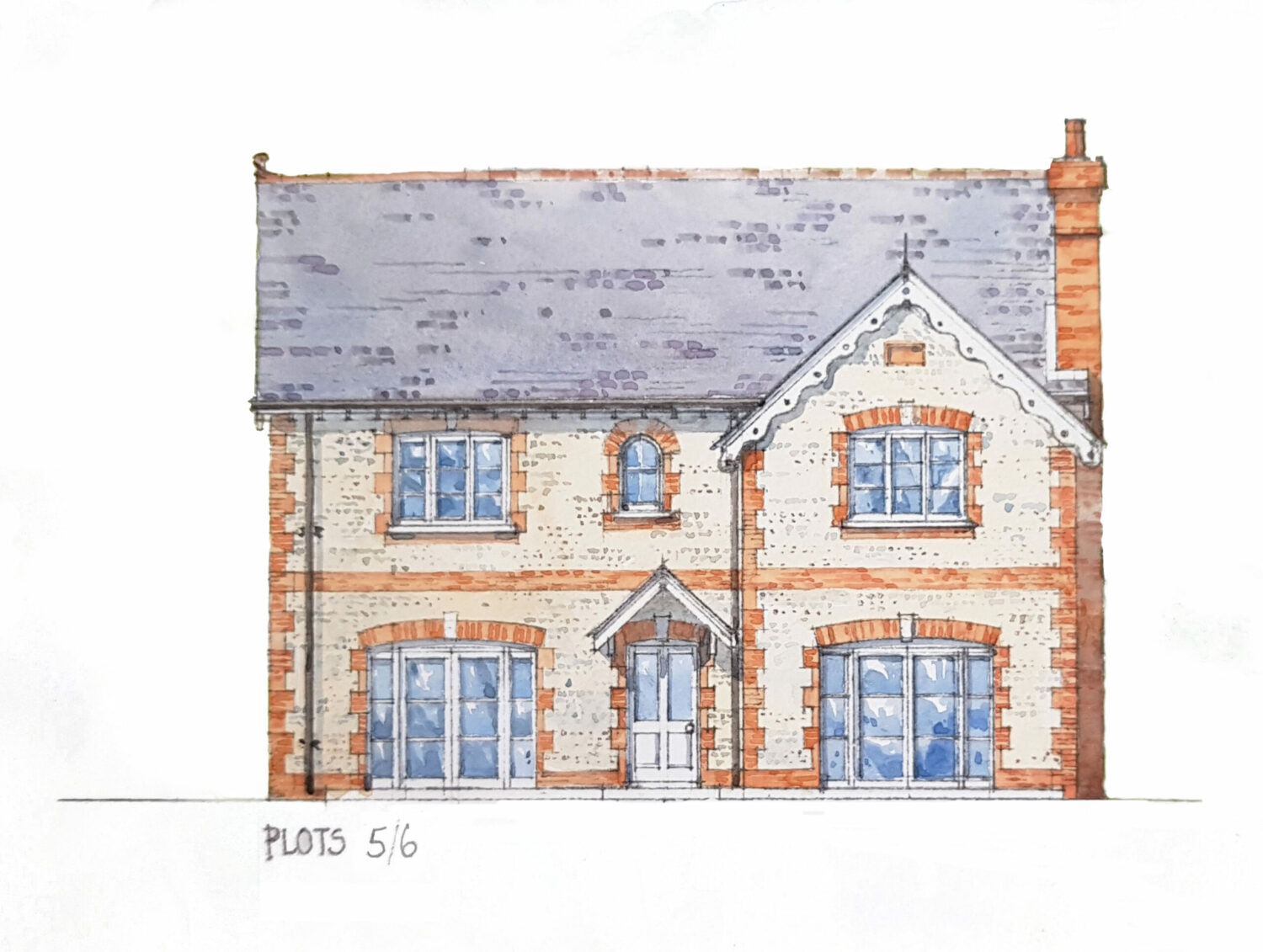
The plan includes 12 market homes and 6 affordable ones for local residents.
Project Challenges
The exceptional quality of the site presented challenges and opportunities in equal measure. Located on the northern fringe of the village, the views through the winter trees that loosely contain the site allow glimpses of the famous Cerne Abbas Giant, etched into the chalk downland to the east. Although the tree-lined boundaries afford valuable screening to and from the surrounding AONB, the sensitivity of the location required a detailed Land and Visual Impact Assessment to be undertaken, to assess the impact on views from the Giant – a Scheduled Ancient Monument. Critical considerations included the height, materiality and articulation of the dwellings. Visibility above the tree line was mitigated by tree planting within the scheme to provide progressive screening as it matures. The proposals received the support of the Parish Council, with the Senior Conservation Officer also assessing the scheme favourably, finding it to be well designed and without any negative impact on the historic setting.
A further leading constraint upon the scheme design was the increasing vulnerability of Cerne Abbas to surface water flooding – a concern strongly expressed by local people. A sophisticated drainage design was developed, comprising a naturalised attenuation pond in the heart of the site, plus a significant underground crated system at the southern end of the site. This achieved the approval of both the water and flood authorities as an effective method of not only controlling but reducing the rate of discharge into the local river courses during peak periods of rainfall.
The attenuation pond itself onto which many of the cottages will face, will form a key attractive and central feature of the scheme, surrounded by natural planting. The main access through the site which will pass around it will be low impact, and unadopted. A core objective is to maintain the rural setting, which is a key part of the village’s identity.
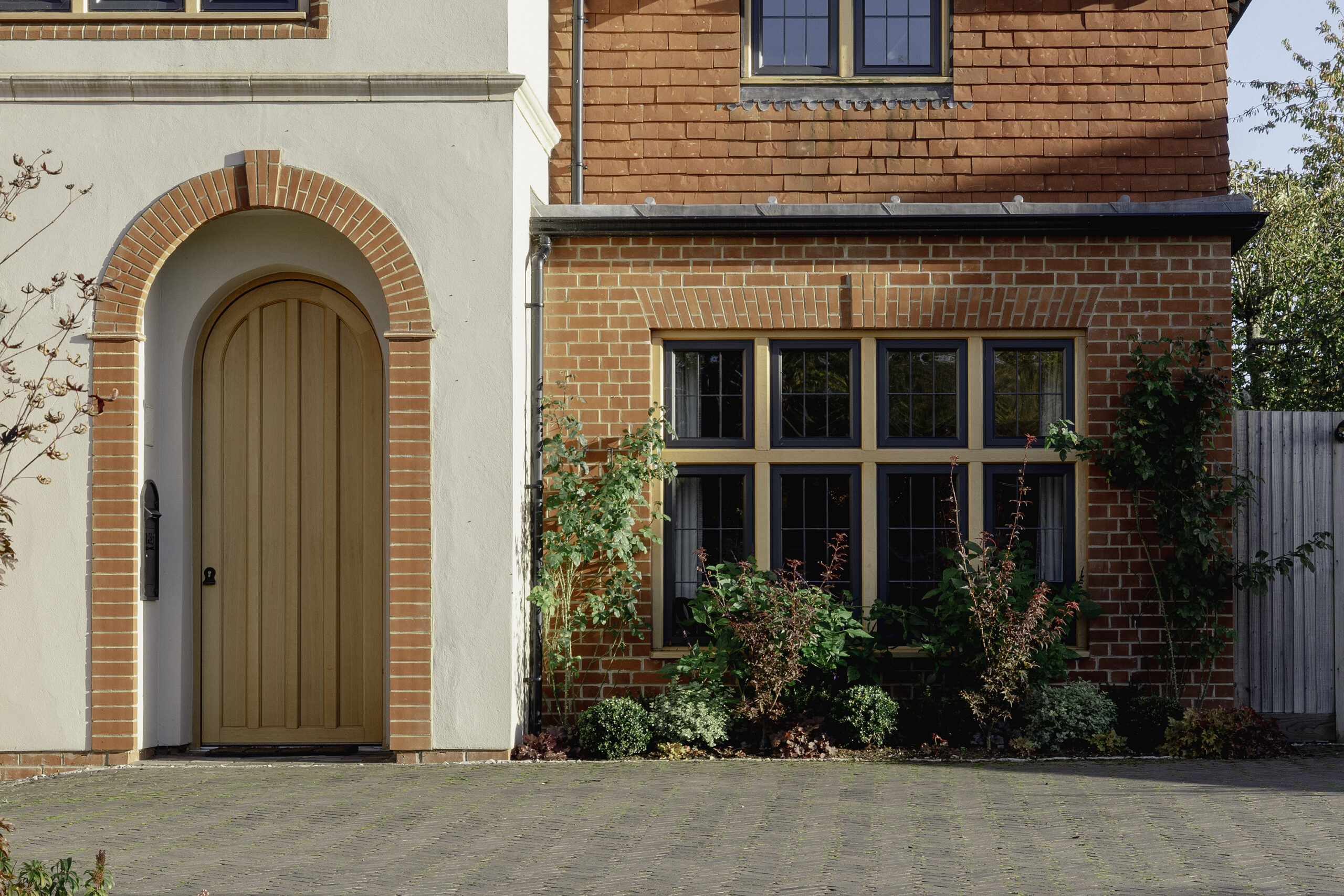
The informal, low-density layout will sit comfortably within the surrounding, characteristic pattern of development. Using typical local materials of brick and flint under slate roofs, the dwellings have been designed with careful attention to their architectural forms, proportions and detailing – ensuring they will sit harmoniously within the sensitive historic setting of one of Dorset’s most quintessential villages.
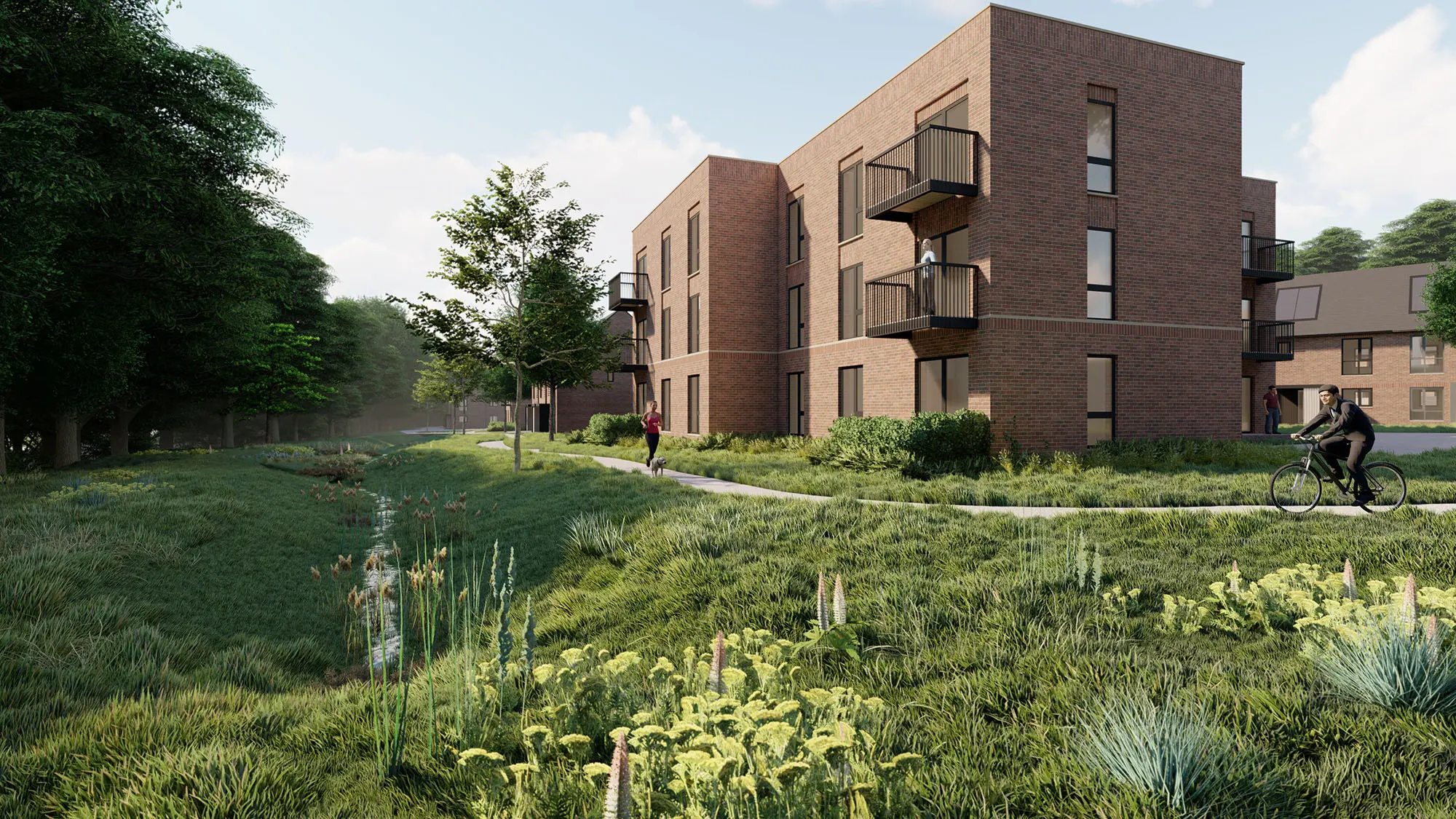
Whilst the development will comprise 12 open-market homes, it also includes 6 affordable cottages and flats, with the specific intent to provide homes to local people.