
The Role of BIM in Modern Architectural Practices
Building Information Modelling (BIM) is an important development in the architecture and construction industries. This technology started as a digital drafting tool and is now a collaborative process that has changed how buildings are designed, delivered, and maintained.
This holistic approach provides a tracked framework of information on a building project from concept and completion through to management and maintenance. With ever increasing building regulations and requirements, BIM offers a way to manage and track a building’s evolving design and specification, greatly assisting the Golden Thread mandated by the Building Safety Act while providing tracked changes to any design project.
BIM is a vital part of modern architectural practice, boosting efficiency, communication, and creativity. As clients require greater accuracy, sustainability, and cost certainty, BIM can help to meet these expectations.
From drawings to data
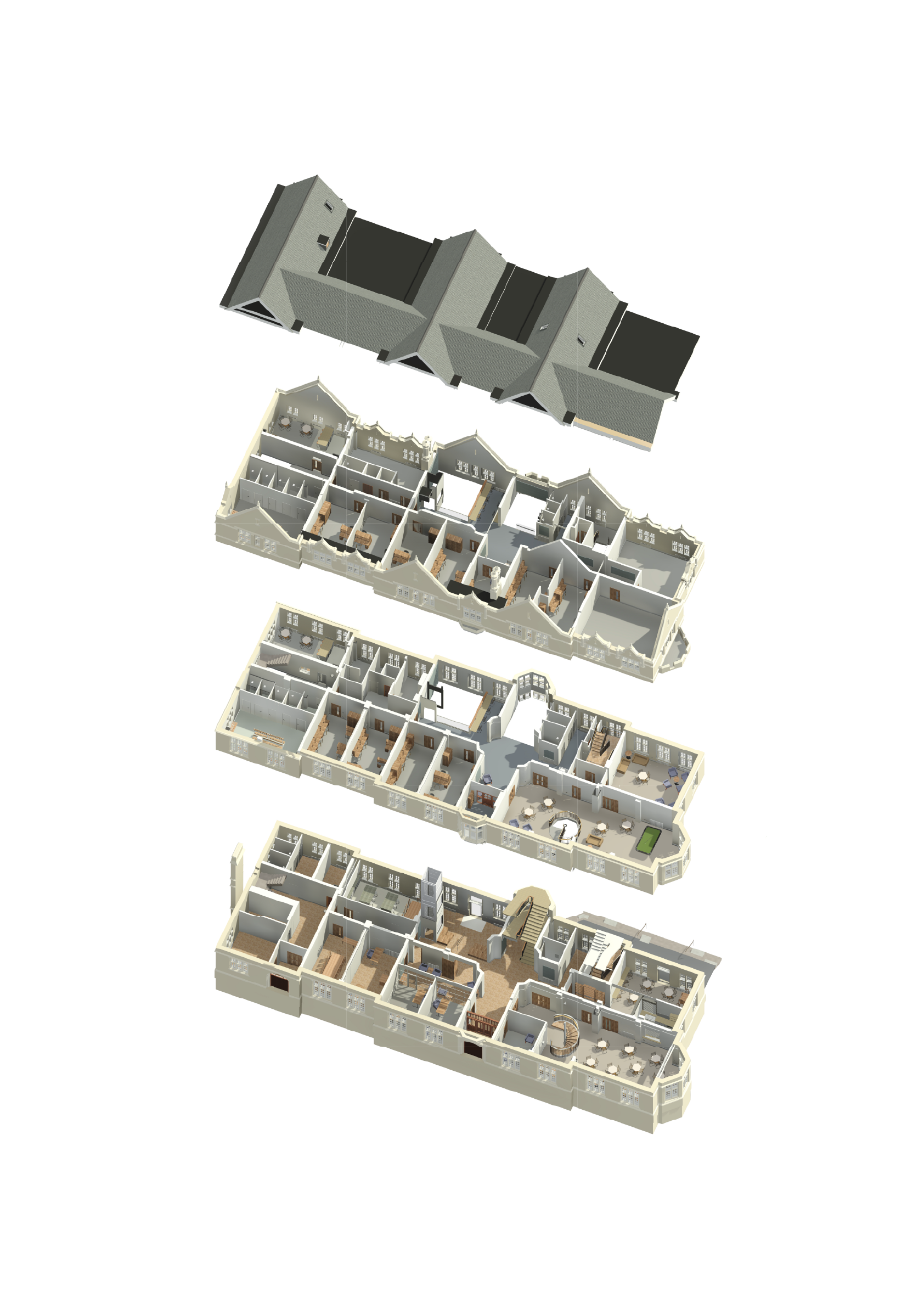
Architects traditionally relied on 2D drawings that needed constant updating as projects progressed. However, BIM creates digital models that hold geometry and other embedded information, making 2D drawings a thing of the past. Materials, structural performance, costs, environmental data, and lifecycle details are stored and update as the project moves on.
Switching from static drawings to dynamic information means architects can make more precise design decisions. Changing a wall type, adjusting a window location, or modifying a structural grid automatically updates the entire model, reducing the need for manual rework and preventing inconsistencies that could lead to costly issues.
BIM also provides the option to prepare different design options within the same model. This means alternative solutions can be tested on one aspect of the design while those that have been agreed can move to the next level. As the project progresses, clash detection of the structural and mechanical designs can be undertaken, ensuring any conflicts are identified and resolved long before the project gets to site.
BIM doesn’t have to be complicated, sometimes it’s just a basic 3D model showing the shape and size of a building. However, it can also be highly detailed, with every component included and containing full specifications, maintenance instructions, and even product codes for ordering replacements.
Boosting collaboration and coordination
Architectural design is collaborative as it involves engineers, contractors, planners, and clients. BIM brings these people together which improves communication and reduces the risk of misunderstandings.
Tools can help identify conflicts early in the design stage and, by resolving these issues digitally rather than on site, BIM saves time, reduces waste, and improves quality.
Meetings are also more efficient as instead of reviewing separate drawings, teams can look at the latest model, identify issues in real time, and make decisions based on accurate information.
The Williams Lester BIM package includes a Common Data Environment (CDE) where we can share our BIM models with the design team. This allows the BIM model to be developed and coordinated between consultants in near real time, offering potential reduction in design time and abortive work.
Encouraging sustainable architectural design
Sustainability is very important in modern architecture, and BIM can help teams to achieve environmental performance targets. The data within BIM models means architects can analyse and optimise:
- Energy performance
- Material quantities
- Thermal performance and insulation strategies
- Ventilation and comfort
With BIM, architects can simulate how buildings behave, helping them design structures that use less energy, create healthier environments, and meet compliance standards. As regulations around carbon and energy become stricter, BIM will continue to be essential in delivering environmentally responsible architecture.
Fast, accurate decision-making
Architects often need to balance design vision with practicality, budget, and compliance. BIM simplifies this process by giving them access to real-time data that supports informed decision-making.
For example, quantity calculations can be generated automatically, improving cost accuracy and helping clients assess financial feasibility. Design options can be tested quickly, allowing architects to be creative without negatively impacting their efficiency.
In tendering and value management, the BIM model helps you calculate exactly how much material a project needs. If you change a material or product, the model can quickly show how that change affects cost, quantity, and design.
This is invaluable in an industry where timelines are tight and changes are expected. BIM ensures decisions are made on clear, consistent information, reducing uncertainty throughout the project.
Improving construction quality
One of the biggest advantages of BIM is its ability to improve design through making it easier for the build to be constructed. Contractors benefit from detailed models that help them understand sequences, logistics, and site conditions more effectively.
Our BIM software allows us to undertake shadow analysis of existing and proposed buildings. We can also quickly cut sections through the building and site to assess issues, such as overlooking, or test the clearance of stairs and ceilings.
Detailed 3D models enable people to work with confidence. Prefabrication and modular construction also use BIM, as components manufactured off-site require precise dimensions.
Supporting building operations
Clients now often use BIM models to support building operations and maintenance. Facilities managers can access an accurate digital model containing information on everything from systems to warranties, helping them streamline maintenance schedules, improve asset management, and plan refurbishments or expansions.
For architects, this creates opportunities to offer long-term value and grow client relationships once the design is complete.
Changing the skills required
The increasing use of BIM is changing the skills required within the architecture industry as architects need to be able to provide creative designs with technological confidence. Training in BIM software, data management, and collaborative workflows has become standard, and many firms now employ BIM managers or coordinators. This encourages a seamless approach where design, technology, and project management come together effortlessly.
BIM is shaping the future of architecture through helping architects design better buildings, communicate more effectively, and support clients during the design stage and beyond. When complexity, sustainability, and digital transformation are vital, BIM is essential.
Using BIM at Williams Lester
At Williams Lester, we use BIM for all of our projects, and our most basic sketch feasibility studies are underpinned by contextual modelling generated using Autodesk Forma. As our projects develop through the concept stage and into the planning phase, our computer models gradually become more complex with the addition of further details and data.
We’ve put a lot of investment into the implementation and support of BIM technologies, and 100% of our project output is completed using model software. This has resulted in clearer communication, more effective collaboration, resolving issues during the design stage, and improved legality of design.
Find out more about our services or contact us today to discuss your project.